When 'Wiped Down' Isn't Good Enough: How Service Center Cleanings Are Quietly Erasing Your Resale Value
There is a moment familiar to nearly every car owner in Appleton. You drop your vehicle off for routine maintenance—an oil change, a tire rotation, maybe a brake inspection—and when you return, someone has run a damp cloth across the dashboard and perhaps dragged a hose across the exterior. The service advisor smiles and mentions that they gave it a quick clean. You drive home feeling, if not impressed, at least satisfied that something was done.
That satisfaction may be costing you money you don't know you're losing.
The Gap Between 'Clean' and 'Detailed'
The distinction between a mechanical service cleaning and a professional detail is not merely one of effort or time. It is a fundamental difference in purpose, methodology, and outcome. Service centers clean vehicles as a courtesy—a value-added gesture designed to send customers home with a positive impression. Professional detailing, by contrast, is a systematic process aimed at restoring, protecting, and documenting the actual condition of a vehicle's surfaces.
When a service technician wipes down an interior with a general-purpose cleaner, they are not evaluating leather grain separation, early-stage cracking along bolster seams, or the dye transfer that accumulates on light-colored upholstery over time. When they run a hose over the exterior, they are not assessing the depth of swirl marks in the clear coat, the presence of oxidation along panel edges, or the micro-etching caused by road salts that Wisconsin winters deposit with considerable generosity.
These are not cosmetic footnotes. They are the precise details that inform the judgment of every professional appraiser, experienced private buyer, and certified pre-owned inspector who will eventually evaluate your vehicle.
What Gets Missed—and Why It Matters
Professional detailers who conduct pre-sale inspections encounter a consistent pattern. Vehicles that have been regularly serviced at dealerships or independent shops often present with a deceptive surface cleanliness that obscures meaningful deterioration underneath. The exterior may appear acceptably clean until examined under a dual-beam inspection light, at which point swirl patterns, water spot etching, and contamination embedded in the clear coat become unmistakable.
Interiors present an equally telling picture. Service-level cleanings rarely address the areas that buyers and appraisers scrutinize most carefully: the lower door jambs where road grime accumulates in crevices, the underside of seat rails where debris compacts over years, the headliner near the sunroof seal where moisture staining quietly develops, and the steering wheel's tactile surfaces where oils from prolonged contact break down the coating over time.
None of these issues are catastrophic in isolation. Collectively, however, they communicate something damaging to any informed observer: this vehicle has been maintained at a minimum standard, not a premium one. That perception—whether articulated or merely intuited—translates directly into reduced offers.
The Documentation Problem
There is a less obvious dimension to this issue that compounds the financial impact. When a dealership service department performs any work on your vehicle, that activity is logged. Oil changes, tire rotations, and yes, even complimentary washes, may appear as line items in service records that eventually feed into vehicle history documentation.
On the surface, a well-documented service history appears to work in an owner's favor. And in many respects, it does. But sophisticated buyers and appraisers understand how to read between those lines. A vehicle with extensive mechanical service records but no documented professional detailing or paint correction history signals something specific: the owner invested in mechanical reliability but not in surface preservation. For buyers who understand vehicle longevity, that distinction matters. Paint degradation, interior wear, and corrosion are not merely aesthetic concerns—they are structural and financial ones.
A vehicle whose clear coat has been compromised by years of inadequate washing and no corrective treatment will require professional paint correction before it can be sold at full market value. If that correction has not been performed prior to listing, the cost falls to the buyer—and they will price that cost into their offer, often aggressively.
What a Professional Detailer Finds That a Mechanic Doesn't Look For
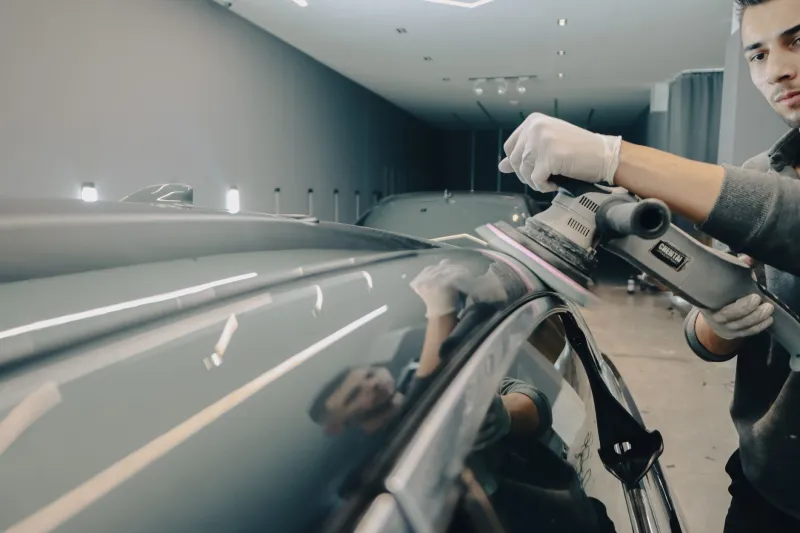
The scope of a professional pre-sale detailing inspection extends well beyond what any service department is equipped or motivated to assess. At Appleton Car Detailing, a thorough pre-sale evaluation examines paint thickness across panels to identify prior bodywork or repainting, assesses the condition of rubber seals and trim for UV degradation, evaluates wheel and brake dust contamination that has bonded to finish surfaces, and documents any interior odors that standard cleaning has failed to neutralize.
Each of these findings carries a dollar value in the resale context. A panel that has been repainted following a minor collision—even competently—will typically show paint thickness readings that differ from adjacent factory panels. Buyers who are aware of this will negotiate accordingly. An interior with embedded odors that a quick vacuum and air freshener have temporarily suppressed will reassert itself during a test drive, raising questions that undermine negotiating confidence at precisely the wrong moment.
Professional detailers do not merely clean these issues away. They identify them, address them where possible, and help owners understand which conditions can be corrected before sale and which ones must be disclosed. That informed approach is the opposite of what a courtesy wipe-down provides.
The Quantifiable Cost of Settling for Less
Industry research consistently demonstrates that vehicles presented in professionally detailed condition command meaningfully higher trade-in offers and private sale prices than those presented in average condition—even when the mechanical condition of both vehicles is identical. Estimates vary by vehicle class and market, but the differential commonly falls between three and ten percent of the vehicle's assessed value.
On a vehicle worth $25,000, that range represents $750 to $2,500. On higher-value trucks and SUVs—which represent a substantial share of Appleton's vehicle market—the absolute dollar figure climbs further. Against the cost of a comprehensive professional detail performed prior to sale, the return on investment is rarely difficult to calculate.
The more significant point, however, is not simply about the final transaction. It is about what owners allow to happen incrementally over years of service-level cleanings that do nothing to arrest surface degradation. By the time a vehicle reaches the resale stage, the accumulated cost of deferred professional care is already embedded in its condition. The trade-in offer, or the private buyer's counteroffer, simply reflects a reality that was years in the making.
A Different Standard for Your Investment
Your vehicle is, for most households, one of the largest financial assets in regular use. Treating its exterior and interior maintenance as an afterthought to mechanical service is a choice that carries real consequences—ones that may not become apparent until you're sitting across a desk from an appraiser or fielding lowball offers from private buyers who can see exactly what the service department's courtesy cloth missed.
Professional detailing is not a luxury reserved for enthusiasts or concours competitors. It is a disciplined practice that preserves the financial integrity of your vehicle across its ownership life. And in a market where buyers are increasingly informed and appraisers are increasingly precise, the difference between 'wiped down' and genuinely detailed is measured not in appearances, but in dollars.