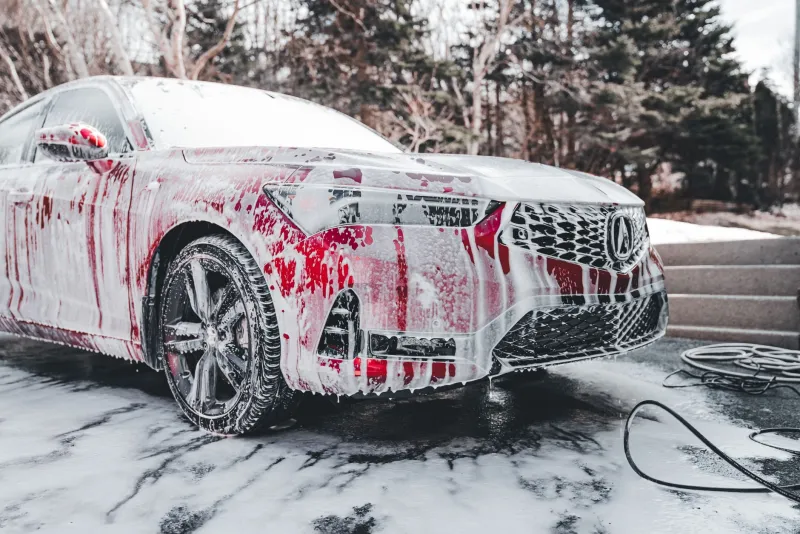
Penny Wise, Paint Poor: The True Financial Cost of Detailing Your Car at Home
There is a certain satisfaction that comes with washing your own car on a sunny Saturday afternoon. The ritual feels economical, even virtuous. For millions of American vehicle owners, the assumption that DIY detailing is the budget-friendly alternative to professional services goes largely unquestioned. But when you begin accounting for every dollar spent and every hour invested, that assumption starts to crack—much like improperly maintained clear coat.
At Appleton Car Detailing, we work with vehicles every day whose owners eventually arrived at the same conclusion: the math does not always favor the driveway approach. Here is a thorough examination of why.
The Startup Costs Nobody Talks About
A professional-quality home detailing setup is not cheap. To achieve results that genuinely protect your vehicle's finish, you cannot rely on a gas station sponge and a garden hose. The baseline investment for a competent DIY setup includes:
- Dual-action polisher: $80–$250
- Microfiber towels (quality set): $40–$80
- Foam applicator pads: $20–$40
- Clay bar kit: $20–$35
- pH-neutral car wash soap: $15–$30
- Iron decontamination spray: $20–$40
- Paint sealant or ceramic coating: $30–$300+
- Wheel brushes, detailing brushes, grit guards: $30–$60
- Wet/dry vacuum: $60–$150
- Buckets and wash mitts: $20–$40
A conservative total lands somewhere between $335 and $1,025 before you have touched your vehicle once. A professional detail at a reputable shop, by contrast, typically ranges from $150 to $400 for a full-service treatment—and that price includes labor, expertise, and professional-grade equipment that far exceeds what most consumers own.
The Ongoing Supply Chain
Equipment is a one-time cost, but consumables are not. Car wash soap, detailing sprays, tire dressings, interior cleaners, and glass treatments all deplete with use. A vehicle detailed four times per year at home can easily consume $150–$250 in supplies annually, depending on product quality. Skimping on product quality, however, introduces its own financial hazard—low-grade compounds and abrasive tools accelerate paint wear rather than reversing it.
Your Time Has a Dollar Value
American workers earn an average of approximately $34 per hour, according to Bureau of Labor Statistics data. A thorough home detail—washing, claying, polishing, sealing, interior vacuuming, leather conditioning, and glass cleaning—takes between four and eight hours when done correctly. At median wage, that represents $136 to $272 in personal time per session.
Over the course of a year with four detailing sessions, the time cost alone reaches $544 to $1,088. When combined with supply costs, a single year of diligent DIY detailing can cost more than two professional services—without accounting for the expertise gap.
The Hidden Liability: Accidental Damage
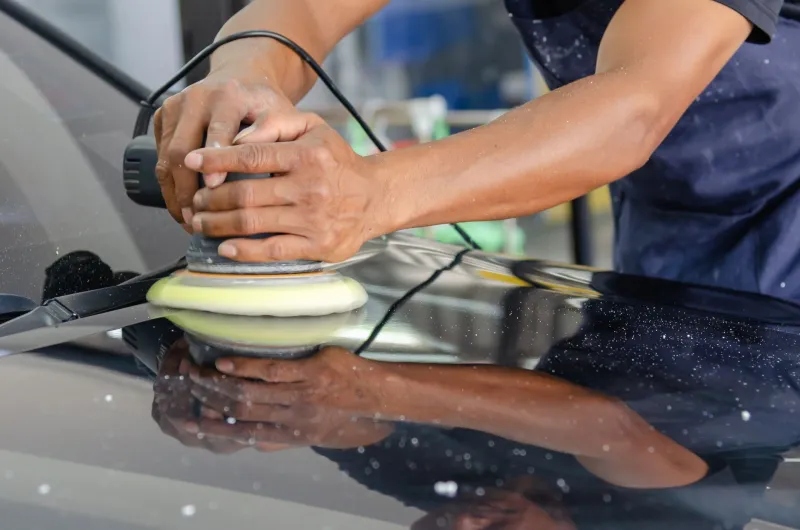
This is where the financial calculus becomes genuinely sobering. Paint correction is not an intuitive skill. Applying too much pressure with a polisher, using the wrong pad, or working in direct sunlight can cause swirl marks, buffer trails, and in severe cases, burn-through—where the clear coat is removed entirely. Repainting a single panel at a body shop costs between $300 and $700. A full repaint on a mid-size sedan can exceed $3,000.
Professional detailers undergo training specifically to avoid these outcomes. They understand paint hardness ratings, correction stages, and the precise machine settings required for different vehicle surfaces. That knowledge is not something a YouTube tutorial fully replicates.
Resale Value: The Long Game
Perhaps the most compelling financial argument for professional detailing is its impact on resale value. According to data from Kelley Blue Book and various automotive market analyses, a well-maintained vehicle exterior can command 10 to 15 percent more at private sale or trade-in compared to a comparable vehicle with paint defects and neglected surfaces.
On a vehicle valued at $25,000, that differential represents $2,500 to $3,750. A vehicle that receives consistent professional detailing—with properly applied ceramic coatings or paint sealants that bond correctly to the surface—maintains its finish integrity far longer than one subjected to inconsistent home treatments.
What Professional Detailing Actually Delivers
When you bring your vehicle to a professional operation like Appleton Car Detailing, you are not simply paying for someone to wash your car. You are investing in:
- Paint thickness measurement to assess correction needs accurately
- Proper decontamination protocols using iron removers and clay treatment
- Machine polishing by trained technicians who understand correction stages
- Professional-grade ceramic coatings that bond with factory-calibrated application
- Interior extraction equipment that removes allergens and odors household vacuums cannot
- Documented vehicle condition records that support future resale conversations
The Verdict
DIY detailing is not without merit. For the enthusiast who genuinely enjoys the process, has invested in quality equipment, and dedicates serious time to learning proper technique, it can be a rewarding hobby. But for the average vehicle owner evaluating the decision purely on financial grounds, the numbers tell a less flattering story than the DIY narrative suggests.
The true cost of home detailing—measured in equipment, supplies, time, and risk—often meets or exceeds what a professional service charges, while delivering inferior results and carrying meaningful financial liability. Protecting your vehicle's value is a long-term investment, and professional detailing is one of the most cost-effective tools available to do exactly that.
At Appleton Car Detailing, our goal is straightforward: deliver showroom-quality results that protect your investment, every single time. The numbers, we believe, speak for themselves.