Glossy on the Surface, Damaged Underneath: What Dealer-Prepped Vehicles Are Actually Hiding

There is something quietly persuasive about a car that gleams under showroom lighting. The windows are streak-free, the tires are dark with dressing, and the interior carries that familiar new-car-adjacent scent. For most buyers, this presentation signals one thing: this vehicle was properly cared for before it reached me.
It was not — at least not in the way most people imagine.
The assumption that dealership-prepped vehicles receive legitimate professional detailing is one of the most persistent and costly myths in the automotive retail space. What actually takes place during dealer prep is something closer to theatrical staging — a process optimized for visual impression over genuine restoration. And in a market like Appleton, where buyers are increasingly discerning and vehicles face year-round environmental punishment, that distinction carries real financial consequences.
What "Dealer Prep" Actually Means
Most dealerships employ either in-house lot technicians or contracted detail crews who are tasked with turning vehicles around quickly. The business model demands it. A used car sitting in inventory is a depreciating asset, and the faster it moves, the better the margin. That operational pressure translates directly into the quality of preparation a vehicle receives.
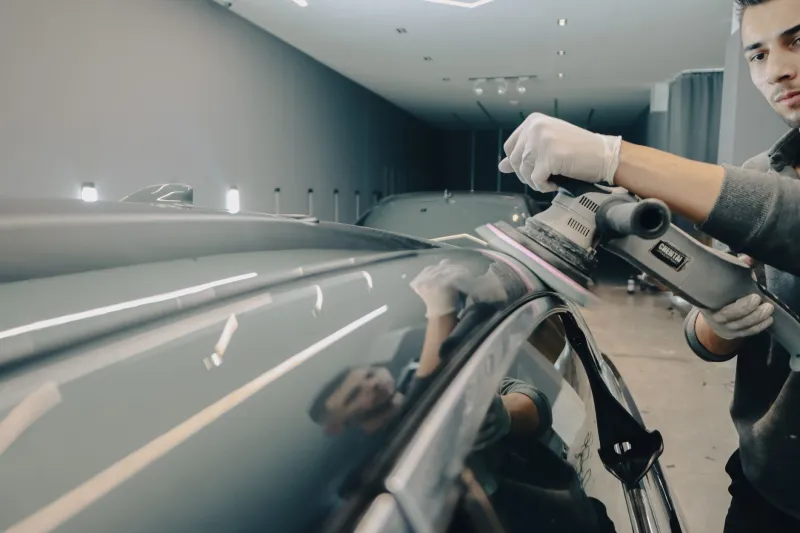
In practice, dealer prep typically involves a pressure rinse or automated wash, a wipe-down of interior surfaces with an all-purpose cleaner, application of tire shine, a light vacuum, and perhaps a spray wax or quick detailer applied to the exterior. For vehicles with more visible issues, additional steps might include odor-masking sprays, touch-up paint applied by hand, or a single-stage machine polish run quickly over the hood and roof — the panels buyers look at first.
What this process is not: a systematic, surface-by-surface inspection. A multi-stage paint decontamination. A legitimate interior extraction and sanitation. A professional assessment of coating integrity, panel oxidation, or subsurface damage.
The goal is not restoration. The goal is presentation.
The Red Flags Buyers Routinely Miss
Because dealer prep is designed to address the most immediately visible flaws, it tends to do exactly that — and nothing more. This creates a predictable pattern of concealment that trained eyes can identify, but that most buyers walk right past.
Consider paint condition. A quick machine polish will temporarily fill fine scratches and improve gloss, but it does nothing to correct deeper swirl patterns, isolated paint transfer, or areas where clear coat has begun to fail. Under direct sunlight — not showroom fluorescents — those issues reappear within days. Buyers who inspect vehicles indoors or on overcast days are at a particular disadvantage.
Interior surfaces present a similar challenge. Steam cleaning or a surface wipe will lift visible grime, but it rarely addresses the biological contamination embedded in fabric, the residue left in door pockets and seat tracks, or the early-stage mold growth that can develop beneath floor mats in vehicles that have experienced moisture intrusion. Odor-masking products can suppress these indicators for days or even weeks before the underlying problem reasserts itself.
Wheel wells, undercarriage panels, and lower door jambs — areas that receive disproportionate exposure to road salt, mud, and moisture in Wisconsin winters — are almost never addressed during dealer prep. These are also the areas most likely to harbor the early stages of rust formation or coating breakdown.
What a Professional Inspection Uncovers
The value of having a vehicle professionally inspected by a qualified detailer before purchase is not simply aesthetic — it is diagnostic. A skilled detailer approaches a vehicle the same way a physician approaches a new patient: systematically, without assumptions, and with an eye toward what is not immediately visible.
At Appleton Car Detailing, pre-purchase inspections routinely surface conditions that dealer prep either could not address or actively masked. Paint thickness readings can reveal whether panels have been repainted — a common indicator of prior collision repair that may not appear on a vehicle history report. Surface texture inconsistencies, even under a fresh coat of wax, can signal where body filler was applied. Interior extraction sometimes reveals the extent of water intrusion that odor sprays temporarily neutralized.
In one recent case involving a trade-in originating from a regional Appleton dealership, a pre-purchase inspection identified significant clear coat failure along the driver-side rocker panels that had been temporarily obscured by a heavy application of spray sealant. The repair cost exceeded $900 — a figure that would have been entirely invisible to a buyer relying on the dealership's own assessment.
This is not an indictment of every dealership or every lot technician. Many are doing their best within the constraints of the system they operate in. The issue is structural: dealer prep exists to serve the dealership's interests, not the buyer's.
Why the Appleton Market Amplifies This Risk
Wisconsin's climate creates conditions that accelerate vehicle deterioration in ways that are not always immediately apparent. Road salt application, freeze-thaw cycling, and extended periods of standing moisture create an environment where minor surface damage can progress to structural compromise faster than in more temperate regions.
A vehicle that spent two winters in the Fox Valley area has been exposed to conditions that test the integrity of every protective layer on its surface. A rushed dealer prep does not account for that exposure history. It applies a thin cosmetic layer over a vehicle whose actual condition may be meaningfully worse than its appearance suggests.
For buyers in Appleton considering a used vehicle purchase — whether from a franchise dealership, an independent lot, or a private seller — the practical recommendation is straightforward: do not allow the visual presentation of a dealer-prepped vehicle to substitute for independent professional assessment.
What Buyers Should Do Instead
Before finalizing any used vehicle purchase, consider the following steps:
Request a pre-purchase inspection from an independent professional detailer. This is distinct from a mechanical inspection — both are valuable, but they assess different aspects of the vehicle's condition. A detailer evaluates surface integrity, interior health, and the cosmetic interventions that may have been applied to mask underlying problems.
Inspect the vehicle in direct natural light. Showroom and garage lighting is specifically designed to flatter paint surfaces. Swirl marks, paint transfer, and oxidation become dramatically more visible under sunlight at a low angle.
Ask the dealership directly what the prep process involved. A dealership confident in the quality of its preparation will describe it. Vague or dismissive responses are informative in their own right.
Examine the areas that prep doesn't reach. Door jambs, wheel wells, the underside of the trunk lid, and the area beneath floor mats are rarely addressed during quick prep cycles. Their condition reflects the vehicle's actual history more accurately than the surfaces buyers typically inspect.
The showroom shine is real. What it represents, however, is often something considerably less than buyers are led to believe. In a market where used vehicle prices remain elevated and competition for quality inventory is real, the cost of misplaced confidence is not abstract — it is measured in repair bills, diminished resale value, and the quiet erosion of an investment that deserved better protection from the start.