Expensive Equipment, Amateur Results: Why Professional Detailing Is About Skill, Not Just Tools
The Assumption That Drives a Costly Mistake
There is a persistent belief circulating among car enthusiasts and budget-conscious owners alike: that professional detailing results are simply a function of having the right products. Walk into any auto parts retailer or scroll through an online marketplace, and the message seems clear—buy the dual-action polisher, invest in the professional-grade compound, and your vehicle's finish will emerge looking as though it rolled off the showroom floor.
It is a compelling narrative. It is also largely incorrect.
Professional detailers do not produce exceptional results because they have access to superior tools. They produce those results because they have invested hundreds, sometimes thousands, of hours learning how those tools behave under specific conditions—across different paint types, at varying temperatures, on surfaces with unique contaminant histories. The equipment is merely the medium. The expertise is the art.
What the Product Labels Don't Tell You
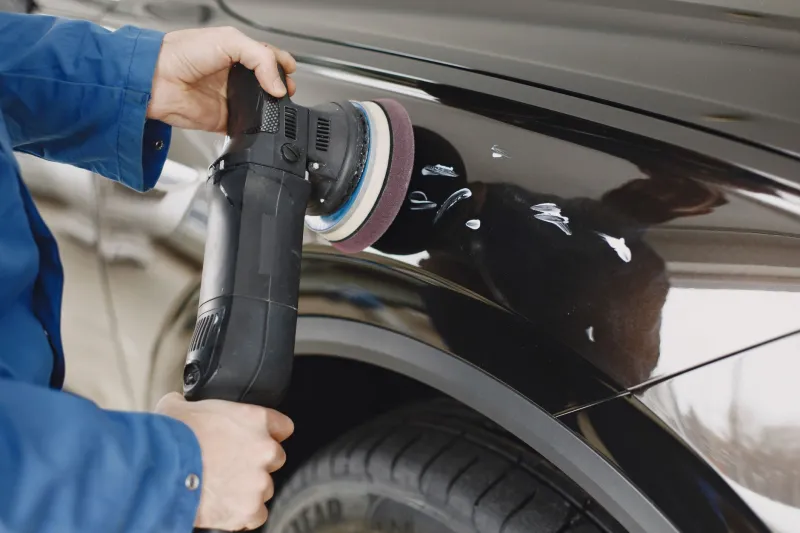
Consider a dual-action orbital polisher, one of the most commonly purchased DIY detailing tools on the market. At face value, it appears forgiving. Manufacturers market these machines as beginner-friendly, and compared to a rotary buffer, they are. However, "more forgiving" does not mean "consequence-free."
Pressure, pad selection, product spread rate, and machine speed must all be calibrated to the specific paint system being worked. Soft, single-stage paint found on many European vehicles responds entirely differently than the harder clear coat applied to most modern Japanese or domestic models. Apply the same technique across both, and you will achieve dramatically different outcomes—often damaging one while barely improving the other.
A professional detailer assesses paint hardness before a single pad touches the surface. They evaluate swirl depth, oxidation level, and clear coat thickness using tools that go well beyond what a standard consumer kit includes. Without that diagnostic foundation, applying an abrasive compound is little more than guesswork applied at 3,000 orbits per minute.
The Damage That Doesn't Show Up Immediately
One of the most insidious aspects of improper tool usage is that the consequences are not always immediate. A DIY polishing session may appear successful on the day of application. The paint looks cleaner, perhaps even shinier. The owner feels satisfied.
Weeks later, however, under direct sunlight or a polarized light source, the truth emerges. Buffer trails—those fine, haze-like scratches left by incorrect machine angles—become visible across the hood and roof. Thin spots in the clear coat, where excessive pressure was held too long in one position, begin to show as dull patches that no amount of wax will correct. In some cases, the clear coat is burned through entirely, exposing the base coat to UV radiation and environmental contamination.
Restoring a panel that has suffered this type of damage is significantly more expensive than a standard paint correction service would have been. In severe cases, repainting individual panels becomes the only viable option—a cost that can easily reach four figures per panel at a reputable body shop.
Product Application Is Its Own Discipline
The mechanical side of detailing is only part of the equation. Chemical application carries its own set of risks that are routinely underestimated by first-time users.
Ceramic coatings, for instance, have become widely available at the consumer level. The marketing suggests that application is straightforward—clean the surface, apply the coating, allow it to cure. What that messaging omits is that any contamination remaining on the paint surface at the time of application becomes permanently sealed beneath the coating. Bonded iron particles, embedded tree sap residue, and even the oils left by a fingerprint can all become locked into the coating, creating defects that require full removal and reapplication to correct.
Paint decontamination prior to coating application is a multi-stage process involving chemical iron removal, clay bar treatment, and in many cases, a polishing stage to eliminate existing surface defects. Skipping or rushing any of those steps does not save time—it simply relocates the cost to a later correction appointment.
The True Cost Comparison
It is worth examining the actual financial math that drives many DIY detailing decisions. A quality dual-action polisher runs between $150 and $300. A starter pad kit, appropriate compounds, polishes, and finishing products add another $100 to $200. A ceramic coating kit marketed to consumers can add $80 to $150 more. By the time a vehicle owner has assembled a reasonably complete setup, they have spent $400 to $650—without accounting for the learning curve, the practice panels that don't exist in a home garage, or the cost of correcting early mistakes.
A professional paint correction and ceramic coating service, performed by a trained detailer on a properly decontaminated surface, represents a single, predictable investment that produces a documented, warranted result. The comparison is not simply financial. It is a question of certainty versus risk.
What Professionals Bring That Equipment Cannot
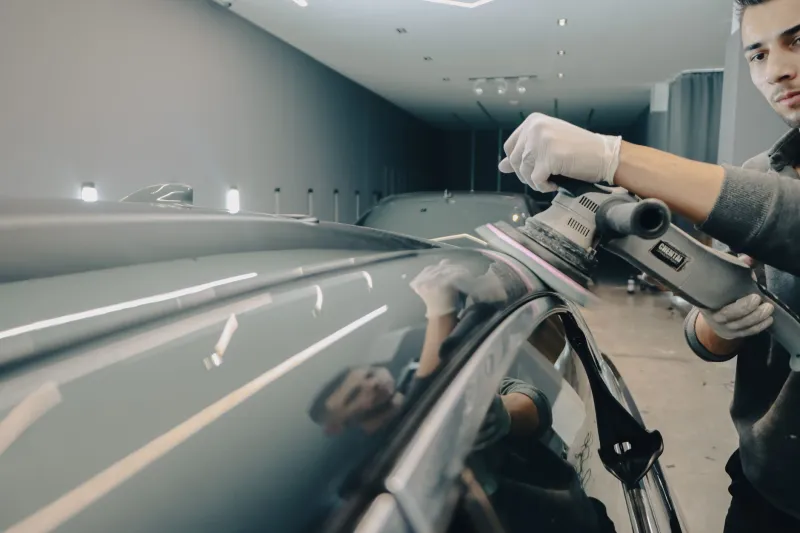
Experience creates intuition. A seasoned detailer knows when a paint surface is responding correctly to a product and when to stop. They recognize the early signs of clear coat stress before damage occurs. They understand that a shaded garage, a climate-controlled workspace, and proper lighting are not luxuries—they are prerequisites for consistent, high-quality results.
For vehicle owners in Appleton and across Wisconsin, where road salt exposure, temperature fluctuations, and seasonal contamination create complex surface conditions, the stakes of an uninformed approach are higher than in more temperate regions. Paint that has already been stressed by winter road chemicals is more vulnerable to mechanical abrasion. Attempting aggressive correction on compromised clear coat without professional assessment is a risk that rarely pays off.
The Smarter Investment
This is not an argument against car care enthusiasm. Owners who wash their vehicles regularly, apply quality spray detailers between professional appointments, and take pride in their vehicle's appearance are exactly the kind of clients who tend to maintain the best long-term results. That engagement matters.
What does not serve those owners well is the assumption that enthusiasm and equipment are sufficient substitutes for professional training and diagnostic skill. The tools are available to anyone. The knowledge of how to use them correctly, safely, and to maximum effect is earned through deliberate practice and professional education.
When the goal is a finish that genuinely reflects the quality of the vehicle beneath it, the most cost-effective decision is almost always a professional one.