Five Detailing Beliefs That Are Quietly Destroying Your Vehicle's Finish
There is no shortage of advice when it comes to keeping a car looking its best. Neighbors offer tips, online forums generate thousands of posts, and well-meaning family members pass down techniques they learned decades ago. The problem is that a significant portion of this advice is wrong — not just ineffective, but actively harmful to a vehicle's paint, clear coat, and long-term value.
At Appleton Car Detailing, we regularly work on vehicles that have been damaged not by neglect, but by the sincere, diligent application of bad information. Understanding why these myths persist is just as important as knowing the truth, because it helps car owners make genuinely informed decisions about how they care for one of their most significant investments.
Myth 1: Any Soap Will Do in a Pinch
This is perhaps the most widespread misconception in automotive care. Dish soap, hand soap, and all-purpose household cleaners are formulated to cut through grease and strip away residue — and they do exactly that to a car's paint. Specifically, they break down the protective wax or sealant that sits on top of the clear coat, leaving the paint fully exposed to UV radiation, contaminants, and oxidation.
Automotive-specific wash soaps are pH-balanced and designed to clean without stripping protection. The difference in chemical composition is not a marketing invention; it reflects a genuine distinction in how these products interact with painted surfaces. Using dish soap once may seem harmless, but repeated use accelerates paint degradation in ways that are difficult and expensive to reverse.
Myth 2: Clay Bars Are Only for Show Cars
Among the most dangerous myths in casual car care is the belief that clay decontamination is an optional step reserved for enthusiasts or concours-level vehicles. In reality, clay bars address a problem that affects every car driven on public roads: embedded surface contamination.
Brake dust, industrial fallout, tree sap residue, and airborne pollutants bond to paint at a microscopic level. Washing alone cannot remove them. When these contaminants remain on the surface and a car owner then applies wax or a sealant over them, the protection is applied over a compromised surface — reducing its effectiveness and, in some cases, locking in the contamination.
Clay decontamination should be performed at least once or twice a year on most vehicles in the Appleton area, where road conditions and seasonal debris create consistent contamination challenges. It is not a luxury step; it is a foundational one.
Myth 3: Waxing and Ceramic Coating Accomplish the Same Thing
This myth has become more prevalent as ceramic coatings have entered the mainstream conversation around paint protection. The two products are not interchangeable, and treating them as equivalent leads to misplaced expectations and inadequate protection.
Carnauba wax is a natural product that sits on top of the clear coat and provides a warm, glossy appearance. It offers moderate protection against UV exposure and light contamination, but it degrades relatively quickly — typically within a few months depending on climate and washing frequency. It does not bond chemically to the paint.
Ceramic coatings, by contrast, form a semi-permanent bond with the clear coat at a molecular level. They create a significantly harder surface that resists chemical etching, UV damage, and minor abrasion far more effectively than wax. They also last substantially longer — often measured in years rather than months. Applying wax over an existing ceramic coating is not harmful, but it does not enhance the ceramic layer's performance. Understanding this distinction allows car owners to choose the right level of protection for their needs and budget.
Myth 4: Automatic Car Washes Are a Safe, Convenient Option
Convenience is understandable, and automatic car washes are genuinely useful for removing loose surface dirt. However, the brushes and cloth strips used in many tunnel-style washes are a consistent source of swirl marks and fine scratches. These imperfections accumulate over time and gradually dull the clarity and depth of a paint finish.
Even touchless washes rely on high-pressure water and aggressive chemical solutions that, with repeated use, can strip protective coatings and contribute to oxidation. Neither option represents a safe substitute for a proper hand wash using clean microfiber towels, fresh wash water, and appropriate automotive soap.
For car owners in the Appleton area who rely on automatic washes during winter months, this is a particularly relevant concern — road salt and chemical deicers compound the problem by increasing the need for washing while simultaneously making the paint more vulnerable.
Myth 5: More Product Means Better Protection
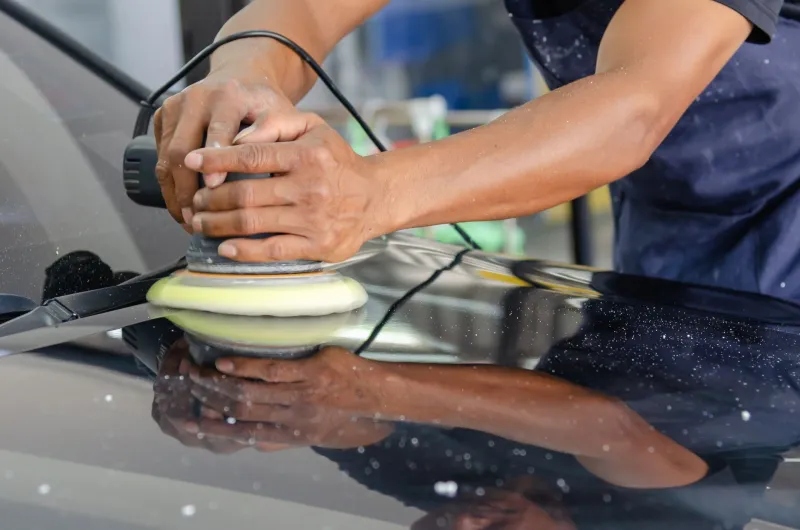
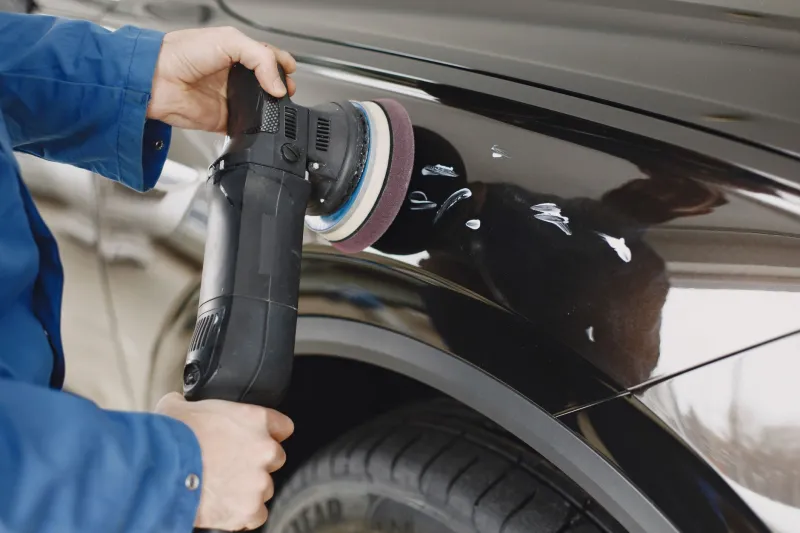
This final myth is one that many car owners discover only after the damage is done. Whether it is wax, polish, or a spray sealant, applying excessive amounts of product does not improve results — it creates problems. Thick wax application leads to residue that is difficult to remove and can leave a hazy, uneven finish. Overuse of polish removes more clear coat than necessary, accelerating the thinning of a layer that cannot be replaced without repainting.
Professional detailers work with precise, controlled amounts of product because the science of paint correction and protection is not a matter of more is better. It is a matter of the right product, in the right quantity, applied with the right technique.
What Car Owners Should Actually Do
The most effective approach to paint care begins with accurate information. Use automotive-specific products, perform clay decontamination regularly, understand the meaningful differences between protection options, and treat automatic washes as a last resort rather than a routine. When in doubt, a consultation with a professional detailer is far less expensive than correcting the damage that follows from well-intentioned but misguided habits.
At Appleton Car Detailing, we have seen the full range of what misinformation can do to an otherwise well-maintained vehicle. The good news is that most paint damage caused by these myths is correctable — but prevention is always the more cost-effective path.