Frequent Washes, False Security: What Your Paint Is Losing Between Professional Detailing Visits
There is a certain satisfaction in pulling a clean vehicle out of a car wash bay. The water beads, the windows gleam, and for a moment, it feels as though the vehicle has been properly cared for. That feeling is understandable. It is also, in many cases, misleading.
For vehicle owners in Appleton who rely on weekly or biweekly wash routines — whether at a touchless facility, an automated tunnel, or even the driveway — there is a critical distinction that rarely gets made: washing a car and maintaining a car are not the same activity. Conflating the two is one of the most financially consequential mistakes a vehicle owner can make, and it is far more common than the detailing industry typically acknowledges.
What a Wash Actually Removes — and What It Leaves Behind
A standard wash, regardless of method, is designed to address surface-level contamination. Dirt, road film, bird droppings, and loose debris are removed. What a wash does not address is the microscopic layer of bonded contamination that adheres to your vehicle's clearcoat over time.
In Appleton, that contamination profile is particularly aggressive. Road salt applied from late autumn through early spring does not simply rinse away. Its chemical residue penetrates surface pores in the clearcoat, accelerating oxidation from within. Industrial fallout — iron particles from brake dust and rail deposits — embeds itself in the paint surface and begins to rust on contact with moisture. Tree sap, pollen, and the specific mineral content found in northeastern Wisconsin's water supply leave behind deposits that a standard wash cannot dissolve.
When these contaminants are left unaddressed, they do not remain inert. They interact with UV radiation, temperature fluctuations, and subsequent wash cycles to progressively degrade the clearcoat that protects your vehicle's base paint. The result is a surface that looks clean after a wash but is structurally compromised beneath what the eye can detect.
The Compounding Cost of Deferred Professional Care
The economics of detailing maintenance are counterintuitive for most vehicle owners, and that is precisely why so many people underinvest until the damage has already accumulated.
Consider the clearcoat on a typical modern vehicle. It is engineered to last — but only under conditions that include periodic professional decontamination, paint correction, and protective reapplication. Each wash cycle that drags bonded contaminants across an unprotected surface introduces micro-abrasions. Each Wisconsin winter that deposits salt into unaddressed surface defects deepens the oxidation pathway. Each summer of UV exposure on a clearcoat that has lost its protective coating accelerates fading and chalking.
None of these processes are dramatic. That is what makes them so expensive. By the time swirl marks become visible under direct light, by the time oxidation produces a hazy, dull appearance, by the time the clearcoat begins to peel at the edges — the damage has moved beyond what a single professional detail can correct. Multi-stage paint correction, wet sanding, and in severe cases, partial or full respray become the only remedies. Those services carry costs measured in hundreds to thousands of dollars, depending on the extent of the damage.
A professional detailing regimen, maintained at appropriate intervals, interrupts this progression before it becomes irreversible.
What Professional Detailing Actually Does That Washing Cannot
The distinction is not simply one of thoroughness. Professional detailing operates on an entirely different technical level than any wash routine.
A qualified detailer begins with a paint decontamination process — clay bar treatment, iron fallout removal, and chemical decontamination — that strips away bonded contamination a wash cannot reach. This step alone eliminates the primary drivers of between-service degradation.
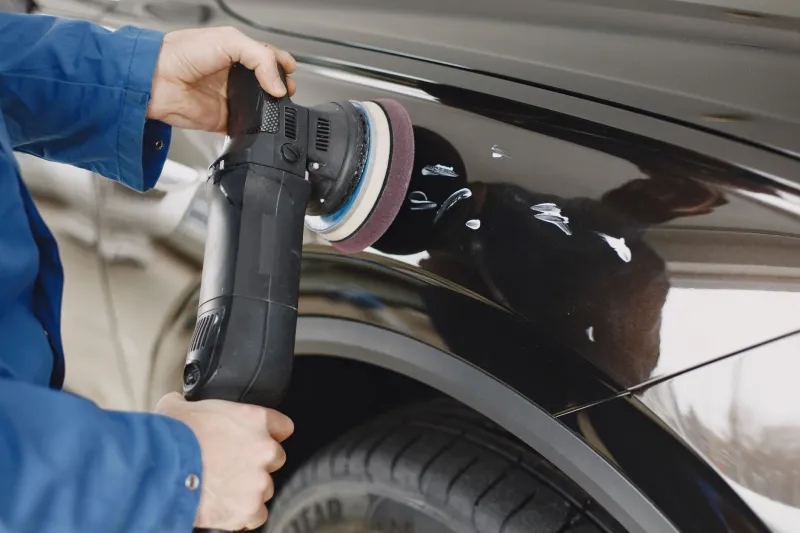
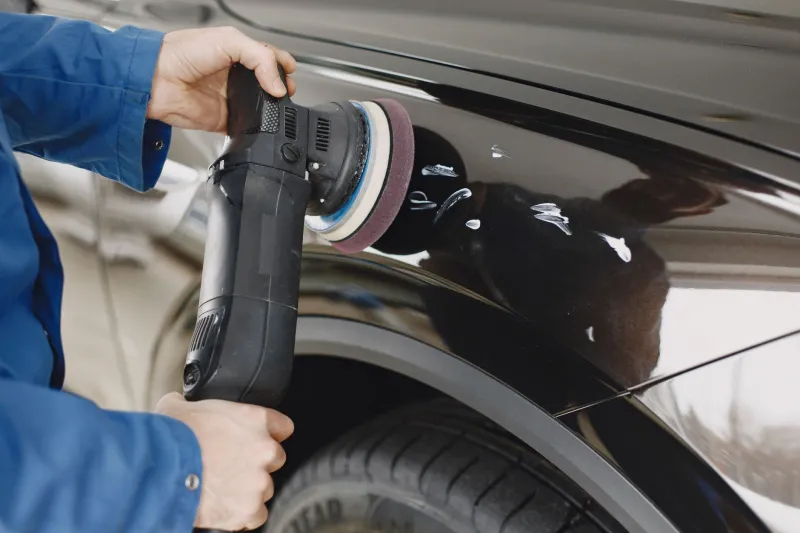
Following decontamination, paint correction addresses the micro-scratches, swirl marks, and surface defects that have accumulated since the last service. This is not cosmetic vanity. Paint correction restores the structural integrity of the clearcoat surface, removing the compromised material that would otherwise serve as an entry point for further chemical and environmental damage.
Finally, the application of a professional-grade protective layer — whether a carnauba wax, paint sealant, or ceramic coating — creates a sacrificial barrier between your vehicle's finish and the environment. This layer is what makes subsequent washes genuinely effective, because it gives contamination something to bond to other than the clearcoat itself.
Without this protective layer, every wash is simply dragging contamination across an exposed and increasingly vulnerable surface.
Appleton's Climate Makes the Case Stronger Than Most
This is not a generic argument applicable equally across the country. Appleton's climate creates a set of conditions that make professional detailing intervals more consequential than they would be in, say, Phoenix or coastal Florida.
The freeze-thaw cycles that characterize a northeastern Wisconsin winter are particularly destructive. Moisture infiltrates surface defects, freezes, expands, and enlarges those defects with each cycle. Road salt — applied generously and necessarily across Appleton's streets — is a desiccant and corrosive agent simultaneously. It draws moisture from the air while chemically attacking metal and clearcoat surfaces.
Summer in the Fox Valley brings its own pressures. Prolonged UV exposure at higher temperatures accelerates oxidation and clearcoat degradation, particularly on vehicles that are parked outdoors regularly. The transition seasons — spring and fall — introduce heavy pollen loads, tree sap, and the residual contamination left behind by winter salt that has dried and bonded to the paint surface.
A vehicle that is washed regularly but detailed infrequently in this environment is not being maintained. It is being managed toward an increasingly expensive correction event.
The Resale Calculation Most Owners Miss
Vehicle depreciation is inevitable. The rate at which it occurs, however, is not fixed — it is influenced directly by the condition of the paint, interior, and protective surfaces at the time of appraisal or private sale.
Buyers and appraisers do not see your wash receipts. They see the condition of the vehicle in front of them. A paint surface showing oxidation, swirl marks, or fading communicates neglect regardless of how frequently the vehicle was washed. Conversely, a vehicle with a well-maintained finish — one that reflects light cleanly and shows no surface defects — signals care and commands a measurably higher valuation.
Industry data consistently supports a several-hundred to several-thousand dollar differential between vehicles in excellent cosmetic condition and those showing deferred maintenance, depending on the vehicle's age and market segment. For many owners, the cumulative cost of a professional detailing schedule over three to five years is substantially less than the valuation penalty imposed by skipping it.
A More Honest Accounting
The monthly car wash is not without value. It removes surface contamination and, when done correctly, reduces the accumulation of damaging material between professional services. But it is not a substitute for professional detailing, and treating it as one is a form of false economy that becomes apparent only when the correction bill arrives.
Vehicle owners in Appleton who want to protect both their paint and their investment are best served by understanding these services as complementary rather than interchangeable. Wash regularly. Detail professionally, on a schedule appropriate to your vehicle, your environment, and your ownership goals.
The difference between those two habits is not visible in the short term. Over three, four, or five years of Wisconsin driving, it becomes impossible to ignore.