What Insurance Adjusters and Owners Both Miss: The Case for a Professional Detailing Inspection

Most vehicle owners approach their car's condition the same way they approach their own health—reactively. They notice something when it becomes impossible to ignore, and by then, the damage has typically compounded well beyond its original scope. Insurance adjusters, meanwhile, operate under a different constraint: time. A field assessment that takes twenty minutes cannot realistically capture the full condition of a vehicle's paint, interior surfaces, mechanical gaps, or finish chemistry. The result, in both cases, is a documented condition that is incomplete at best and financially damaging at worst.
What professional detailers do during a thorough vehicle inspection is neither casual nor quick. It is a structured, methodical process—one that draws on pattern recognition developed across hundreds of vehicles—and it produces the kind of granular documentation that holds up in a negotiation, a private sale, or a dispute with an insurer.
How a Professional Inspection Actually Works
A trained detailer does not begin at the hood and work toward the trunk. The process starts with ambient light assessment: positioning the vehicle under controlled or natural lighting conditions that reveal surface imperfections invisible under a garage fluorescent or a dealership's showroom bulbs. Paint swirl patterns, oxidation gradients, and water spot etching become immediately apparent under proper light angles—defects that a standard visual scan, even by an attentive owner, will consistently miss.
From there, the inspection proceeds panel by panel, with each surface evaluated for finish depth, contamination presence, and structural integrity. A clay bar test on select areas identifies embedded ferrous particles and industrial fallout—contaminants that sit below the surface layer and accelerate paint degradation silently. An adjuster does not perform this test. An owner almost certainly does not know it exists.
Interior assessment follows a similarly rigorous sequence. Leather surfaces are examined for stress cracking in low-light fold zones, fabric is checked for subsurface staining that has been treated cosmetically but not resolved chemically, and headliners are inspected for sagging adhesion—a common failure point in vehicles that have experienced water intrusion, even minor. These are not aesthetic concerns alone. They are condition indicators that directly affect appraisal value.
The Specific Damage Patterns That Trained Eyes Identify
There are several categories of vehicle damage that consistently escape detection by non-specialists. Understanding them clarifies why a professional inspection carries a different level of authority.
Clear coat separation begins as a nearly invisible haziness along panel edges, particularly on horizontal surfaces with prolonged sun exposure. In Wisconsin's climate, where UV intensity spikes in summer and freeze-thaw cycles stress painted surfaces throughout winter, this progression moves faster than owners expect. By the time it is visible to an untrained eye, the underlying paint layer is already compromised.
Water spot etching is frequently misidentified as surface dirt. Appleton's municipal water supply carries mineral content that bonds to paint chemistry at a molecular level when water evaporates. What remains is not a deposit that wipes away—it is a chemical alteration of the clear coat surface that requires professional correction. An insurance adjuster reviewing a hail-damaged vehicle, for example, may attribute panel cloudiness to the storm event rather than pre-existing mineral etching. The distinction matters when the settlement is calculated.
Seam and trim contamination accumulates in the channels between body panels, around door handles, and beneath badge lettering. These zones trap road salt, brake dust, and organic debris that initiate corrosion processes invisible from the surface. A professional inspection probes these areas with appropriate tools and lighting. A walk-around assessment does not.
Why Documentation Is the Inspection's Most Valuable Output
The inspection itself has immediate value—it tells you what your vehicle's actual condition is. But the documentation it produces has durable financial value that extends well beyond the appointment.
High-resolution photography taken under controlled conditions, organized by panel and annotated with specific observations, creates a timestamped record of your vehicle's condition at a defined point in time. This record serves multiple purposes.
Before filing an insurance claim, it establishes a pre-loss baseline. If your vehicle sustains storm damage, a parking lot incident, or a collision, the documentation distinguishes pre-existing condition from new damage. Without it, adjusters assign fault for prior defects to the claim event—and the settlement reflects that assumption. With it, you have photographic evidence that holds up in a dispute.
Before a private sale, it provides prospective buyers with objective condition evidence that reduces negotiating leverage based on vague concerns. A buyer who might otherwise discount an asking price by fifteen hundred dollars over ambiguous paint condition has less standing when a professional inspection report documents the surface as structurally sound with only minor cosmetic wear.
Before a trade-in appraisal, it gives you a factual counter-position when a dealer's assessor identifies defects that inflate their reconditioning estimate. Dealers routinely use condition uncertainty to their advantage. A professional inspection removes that uncertainty from the equation.
The Appleton Context
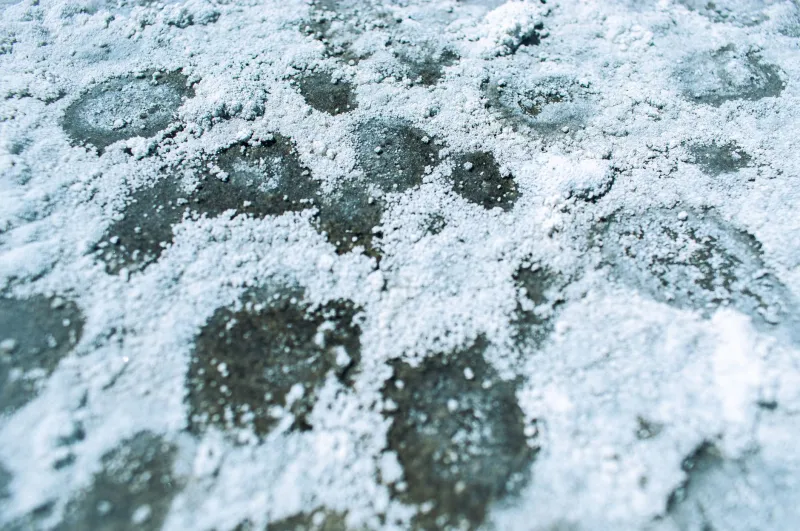
Drivers in northeastern Wisconsin face a vehicle condition environment that is more demanding than the national average. Road salt applied from late October through early April creates ongoing corrosive exposure to underbody surfaces and lower paint panels. Temperature variation across seasons stresses sealants, trim adhesives, and rubber seals in ways that accelerate deterioration timelines. And the region's water chemistry, as detailed in prior discussions, actively works against paint surface integrity.
These factors mean that the gap between what a vehicle looks like and what its condition actually is tends to be wider here than in more temperate markets. A vehicle that appears presentable after a standard wash may have significant subsurface contamination, early-stage clear coat failure, or interior humidity damage from snow melt tracked inside during winter months. A professional inspection identifies these issues before they become the other party's leverage—whether that other party is an insurance company, a dealer, or a private buyer.
What to Expect From a Professional Detailing Inspection
A thorough inspection at a professional facility covers exterior paint condition across all panels, glass for pitting and wiper damage, wheels and wheel wells for brake dust corrosion and curb impact, trim and seals for degradation, and interior surfaces including carpet, upholstery, headliner, and dashboard materials. The process typically takes between one and two hours when performed with the care the documentation requires.
The output should include a written condition summary and a complete photographic record organized by vehicle zone. At Appleton Car Detailing, this inspection process reflects the same attention to detail that governs every service we provide—because understanding a vehicle's true condition is the foundation of every professional recommendation we make.
Owning a vehicle in this market without a documented condition baseline is a financial risk that is straightforward to eliminate. The question is simply whether you address it before a claim, a sale, or a dispute—or after.