What Your Car's Condition Is Quietly Confessing to a Professional Detailer
Most vehicle owners assume that a car's condition is simply a matter of how it looks on any given day. Clean it before an appointment, vacuum the floor mats, and the story appears tidy enough. What that assumption misses is that professional detailers are not looking at a snapshot. They are reading an archive.
At Appleton Car Detailing, the initial assessment of any vehicle is less an inspection and more an interrogation—one the car conducts entirely on its own. The paint, the jambs, the wheel wells, and even the seat bolsters each carry evidence of how a vehicle has been treated across its entire service life. Understanding what that evidence reveals is not merely an academic exercise. It has direct implications for future repair costs, resale value, and the kind of protective investment a vehicle actually warrants.
The Door Jambs Nobody Cleans
Few areas of a vehicle betray neglect as reliably as the door jambs. These recessed channels collect road grime, salt residue, and moisture in nearly equal measure, yet they are consistently overlooked by both casual owners and automated wash facilities. When a detailer opens a door and finds a thick, dark accumulation of oxidized debris along the jamb seal, the finding is rarely isolated.
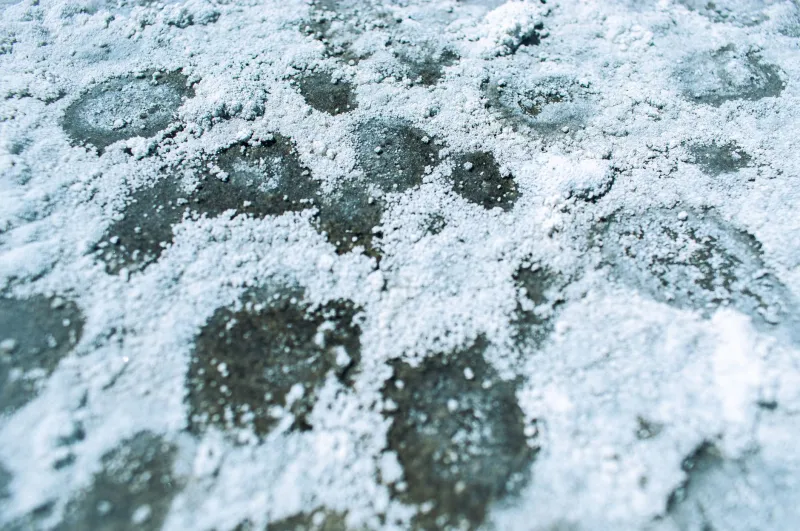
Salt contamination in the door jambs almost always correlates with similar buildup in the undercarriage, behind trim panels, and along the lower rocker panels—areas that accelerate corrosion when left untreated. In Wisconsin, where road salt application begins in earnest by November and continues well into March, this pattern is particularly common. A vehicle that has never had its jambs properly decontaminated is almost certainly carrying compromised paint adhesion in adjacent areas as well.
This is not speculation. It is pattern recognition developed through hundreds of vehicle assessments, and it allows a trained detailer to anticipate where rust initiation is most likely to occur before it becomes visible from the outside.
Brake Dust and What Accumulation Patterns Actually Mean
Wheel surfaces are among the most diagnostic surfaces on any vehicle. Brake dust, which consists of metallic particles shed from both the rotor and the pad during normal braking, adheres to wheel finishes with surprising tenacity. Its distribution across the wheel face, however, tells a more specific story than most owners realize.
A vehicle with heavy, evenly distributed brake dust buildup across all four wheels that has clearly not been addressed in some time suggests infrequent cleaning cycles and, by extension, likely infrequent attention to other maintenance intervals. More telling, however, is asymmetrical accumulation. Significantly heavier deposits on one axle compared to another can indicate uneven brake wear—a mechanical condition that no amount of detailing will correct but that a detailer is in a position to flag during an assessment.
Beyond the mechanical implications, brake dust that has been allowed to bond to wheel surfaces for extended periods becomes increasingly difficult to remove without aggressive chemical intervention. Left long enough, it etches into the clear coat or anodized finish of the wheel, creating permanent surface damage that diminishes both appearance and value. A detailer who identifies this early can often arrest the damage before it becomes irreversible.
Paint Surface Forensics: More Than Meets the Eye
The paint surface is where professional assessment becomes most sophisticated. Swirl marks, water spot etching, and oxidation each carry distinct characteristics that allow a trained eye to determine not just that damage is present, but how it occurred and over what approximate timeframe.
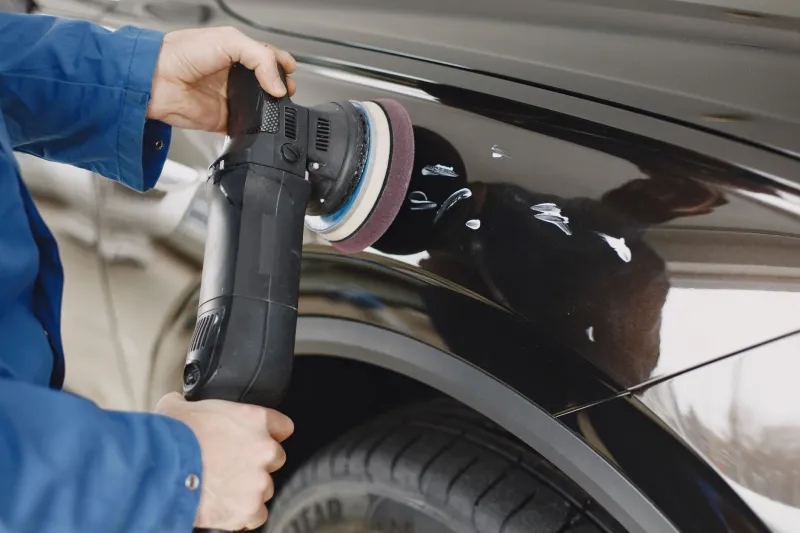
Circular swirl patterns concentrated near the center of body panels, for example, are almost exclusively the product of rotary automatic car washes—the kind that use spinning brushes rather than soft cloth or touchless systems. Their presence confirms a specific cleaning method that has been applied repeatedly. Fine, random scratches distributed more uniformly across a panel tend to indicate wiping with inappropriate materials, often dry or near-dry cloths, a practice common among owners who prioritize speed over process.
Water spot clusters that have begun to etch into the clear coat reveal something different: either a vehicle regularly parked beneath trees or near sprinkler systems, or one that has been washed and allowed to air-dry without proper surface treatment. In Appleton, where hard water mineral content is notably high, these spots can etch surprisingly quickly—sometimes within a single drying cycle if the surface lacks a protective coating layer.
Each of these findings narrows the range of corrective procedures required and, critically, allows the detailer to communicate realistic expectations to the owner before any work begins.
Interior Surfaces as a Record of Daily Habits
The vehicle's interior is equally expressive. Leather seat bolsters—the raised side sections that bear the most contact during entry and exit—develop wear patterns that correspond directly to how frequently the vehicle is used and whether any conditioning regimen has been maintained. Dry, cracked bolsters on a relatively low-mileage vehicle suggest that cleaning has occurred without follow-up conditioning, a common mistake that accelerates leather fatigue far beyond what mileage alone would produce.
Carpet and floor mat condition reveals something about the owner's environment and habits. Vehicles driven regularly through Wisconsin winters and never treated with a proper salt extraction process often show alkaline residue lines embedded into the carpet fibers—visible as faint white or gray tide marks that deepen over successive seasons. These deposits, if left in place, break down carpet backing and contribute to the musty odor that becomes increasingly difficult to neutralize the longer it persists.
Dashboard surfaces and door panel stitching tell their own stories. UV exposure on an untreated dashboard produces a specific chalky surface texture over time. Staining patterns along door panel seams often indicate liquid spills that were blotted rather than properly extracted, leaving residue behind the surface material where standard cleaning cannot reach.
Why This Matters Beyond Aesthetics
The value of a professional detailing assessment extends well past surface appearance. When a detailer can reconstruct a vehicle's maintenance history through physical evidence, the owner gains something a service record alone cannot provide: an honest account of where the vehicle actually stands and what it will cost—in detailing, in mechanical attention, or in depreciated resale value—to ignore the findings.
For owners in the Appleton area considering a trade-in, a private sale, or simply a long-term ownership strategy, this kind of diagnostic clarity is not a luxury. It is a practical tool for making informed financial decisions about one of the more significant assets most households maintain.
At Appleton Car Detailing, the assessment process is designed precisely to surface these findings in a clear, actionable format. Because a vehicle that has been honestly evaluated and properly treated does not just look better—it performs better as a financial asset across every stage of its ownership life.