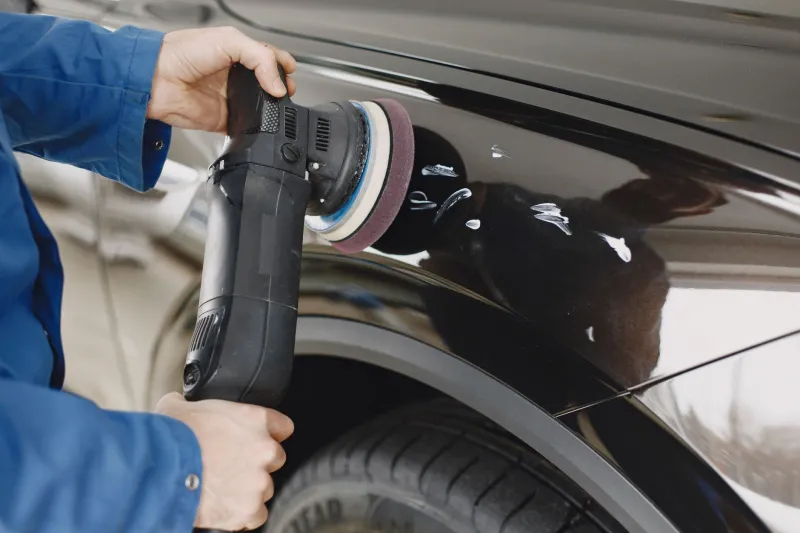
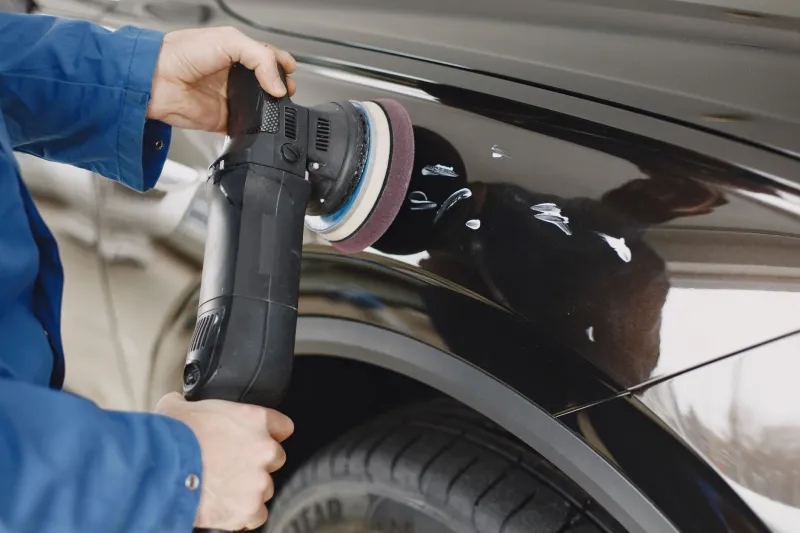
Scheduled Detailing Is Costing You Money: Why the Calendar Is the Wrong Tool for Protecting Your Vehicle
The Calendar Isn't Looking at Your Car
There is a deeply embedded assumption among car owners that detailing, like most routine maintenance, belongs on a fixed schedule. Every three months. Twice a year. Once before winter. The logic feels sound — consistency is generally a virtue in vehicle care — but it rests on a premise that professional detailers encounter and correct daily: that every vehicle, every driver, and every parking situation presents the same level of risk to paint, interior surfaces, and protective coatings.
They do not.
A vehicle parked in a climate-controlled garage, driven twelve miles per day on a suburban commute, and washed by hand every two weeks is not experiencing the same rate of surface degradation as a vehicle left outdoors year-round, driven through highway road salt corridors, and cleaned at an automated tunnel wash. Treating both with the same four-month detailing interval is not diligence — it is, depending on which vehicle you own, either wasteful spending or dangerous neglect.
The distinction matters financially. And in Appleton, where seasonal extremes are neither mild nor predictable, it matters more than most drivers realize.
What a Professional Detailer Actually Evaluates
When an experienced detailer assesses a vehicle, the first question is not "when was it last detailed?" It is a layered investigation of exposure conditions, surface history, and use patterns that collectively determine how aggressively — and how soon — protective or corrective work needs to be performed.
Several factors drive that evaluation.
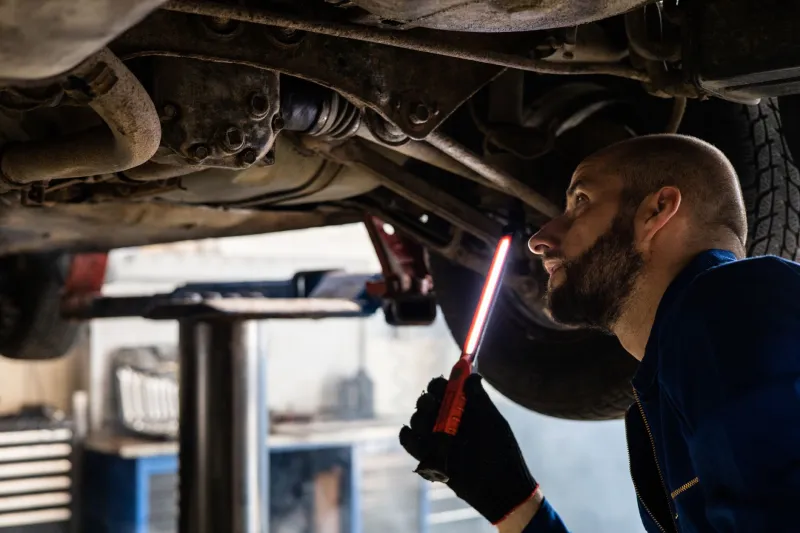
Road salt and chemical exposure. Wisconsin winters are defined in part by the volume of road treatment applied to keep highways passable. Salt, brine, and magnesium chloride compounds do not simply wash off in the next rain. They accumulate in wheel wells, migrate into undercarriage seams, and leave mineral deposits on painted surfaces that accelerate oxidation. A vehicle driven regularly on treated roads during a Wisconsin winter accumulates chemical stress at a rate that bears no resemblance to the same vehicle driven the same miles in May.
Parking environment. Outdoor exposure introduces UV radiation, bird acid etching, tree sap, and ambient particulate contamination on a continuous basis. A vehicle parked beneath a tree line for eight hours a day is receiving a qualitatively different level of surface stress than one kept in a garage. The paint may look similar. The underlying condition often is not.
Commute distance and road type. Highway miles at sustained speeds generate consistent stone chip risk and aerosol debris contact. Stop-and-go urban driving concentrates brake dust on wheels and lower panels. Neither pattern is inherently worse, but each creates specific vulnerability patterns that inform where and how corrective or protective attention should be directed.
Existing protective layer status. A vehicle carrying a properly maintained ceramic coating has fundamentally different maintenance requirements than one relying solely on factory clear coat. The coating's condition — whether it is hydrophobic, contaminated, or beginning to degrade — determines whether the next service call should be a maintenance wash, a decontamination treatment, or a full reapplication assessment.
The Cost of Rigid Intervals
Owners who adhere to a fixed schedule without accounting for these variables tend to fall into one of two costly patterns.
The first is over-servicing relative to need — spending on detailing appointments at a frequency that the vehicle's actual exposure level does not justify. This is a minor financial inefficiency on its own, but it can create a false sense of comprehensive protection that leads owners to skip genuinely necessary targeted treatments because they believe the regular schedule is covering everything.
The second pattern is more damaging: under-servicing at the moments of highest risk. An owner who details in April and October, for example, may be leaving a vehicle unprotected during the period of greatest road salt accumulation — the stretch from November through March when chemical exposure is at its peak and paint protection is most critical. Waiting until a scheduled April appointment to address damage that began accumulating in December is not discipline. It is deferred loss.
Paint correction, once required, costs meaningfully more than prevention. Interior contamination that sets over months becomes a restoration project rather than a maintenance service. The financial case for timing-based detailing is not abstract — it appears clearly in the final cost of ownership.
What a Customized Maintenance Interval Actually Looks Like
A professional detailer working with an Appleton client does not hand over a generic maintenance card. The recommendation is built around a genuine assessment of that vehicle's specific conditions.
For a daily driver kept outdoors and commuted through winter road treatment, the priority is a thorough decontamination service before the salt season begins and a follow-up paint inspection and protective refresh immediately after roads clear in spring. The interval between those two appointments is not arbitrary — it corresponds directly to the period of maximum chemical exposure.
For a vehicle kept in a garage, driven primarily on weekends, and already carrying a ceramic coating in good condition, the professional recommendation may involve longer intervals between full details with a greater emphasis on periodic maintenance washes and contamination checks rather than full corrective services.
For a vehicle approaching a sale or lease return, the calculus shifts entirely. Timing detailing to align with the appraisal window — not with a quarterly calendar — is what converts a detailing expense into a demonstrable return.
In each case, the variable that determines the recommendation is not the passage of time. It is the accumulation of risk.
Turning Detailing Into a Strategic Decision
The owners who extract the most value from professional detailing are not necessarily the ones who come in most frequently. They are the ones who understand that detailing, applied at the right moment in response to real conditions, is a financial tool — not a maintenance checkbox.
Protecting paint before a Wisconsin winter preserves the clear coat that would otherwise absorb months of chemical degradation. Addressing interior odor or contamination early prevents the structural spread that makes later remediation exponentially more expensive. Timing a full detail before a trade-in or private sale is not vanity — it is a documented investment with a calculable return.
The calendar is a convenient fiction. Your vehicle's actual condition — and the conditions it operates in — is the only honest basis for a detailing decision worth making.