Why Your Car Looks Older Than It Is: The Truth About Swirl Marks and Professional Paint Correction
There is a particular kind of frustration that comes with standing in your driveway on a sunny afternoon, freshly washed car gleaming with water beads, only to notice that the paint still looks somehow flat. The color is there. The reflection is there. But something is undeniably wrong — a haze, a web of fine lines, a loss of depth that no amount of rinsing or wiping seems to fix.
For most vehicle owners in the Appleton area, that visual fatigue is not a sign of aging paint or sun damage beyond repair. It is the cumulative signature of swirl marks — and it is far more reversible than most people realize.
What Swirl Marks Actually Are
At the most fundamental level, a swirl mark is a scratch. Not the dramatic kind that catches your fingernail, but a microscopically shallow abrasion in the clear coat — the transparent protective layer that sits above your vehicle's color coat. These scratches are typically circular or arc-shaped in pattern, which is why they are called swirls rather than simply scratches.
What makes them so visually disruptive is physics, not depth. When light strikes an undamaged, polished surface, it reflects back in a uniform direction, producing that clean, mirror-like clarity associated with a showroom finish. When that same light hits a surface riddled with fine abrasions running in dozens of competing directions, it scatters. The result is that characteristic dull, hazy appearance — sometimes described as looking like the paint is covered with a fine cobweb when viewed under direct sunlight or artificial lighting.
Dark-colored vehicles — black, navy, charcoal, deep red — show swirl marks most dramatically because the contrast between the scattered light and the dark background is stark. Lighter vehicles are not immune; the marks are simply less obvious at a glance.
The Everyday Culprits Behind the Damage
The uncomfortable reality is that swirl marks are not the result of neglect. In most cases, they are the direct consequence of routine care performed with the wrong materials or techniques.
Automatic car washes are among the primary contributors. The rotating brushes and friction strips used in tunnel-style washes make contact with your paint under pressure, dragging any grit or particulate matter already on the surface across the clear coat. Even facilities that advertise soft-cloth systems can introduce fine abrasions if those cloths are not meticulously maintained and cleaned between vehicles.
Hand washing with improper materials is equally problematic. A household sponge, a bath towel, or a low-quality microfiber cloth can all trap dirt particles against the paint surface. Each wipe or circular scrubbing motion — especially the kind most people instinctively use — drags those particles across the clear coat, leaving behind arcing micro-scratches.
Drying technique matters just as much as washing. Rubbing a clean car dry with a standard bath towel or even a chamois under light pressure is sufficient to introduce swirl marks, particularly if the surface was not fully rinsed beforehand.
Detailing sprays and quick detailers applied to dirty surfaces are another frequent source of damage. When a light coat of product is sprayed onto a vehicle that has not been properly cleaned and then wiped off, any surface contamination acts as an abrasive between the cloth and the paint.
Over months and years, these individual micro-abrasions layer on top of one another. What begins as a minor loss of gloss gradually deepens into a visibly dull, tired-looking finish — one that makes a five-year-old vehicle look ten years old.
Why This Is Not the Same as Oxidation or Deep Scratches
It is worth drawing a clear distinction here, because many vehicle owners conflate swirl marks with other forms of paint deterioration.
Oxidation — that chalky, faded appearance common on older vehicles — occurs when the clear coat itself breaks down from prolonged UV exposure, heat, and chemical exposure. It is a chemical process, not a mechanical one, and it typically requires more aggressive intervention to address.
Deep scratches that penetrate through the clear coat and into the color coat or primer are a separate category entirely. These require either touch-up paint, wet sanding, or panel repainting depending on severity.
Swirl marks, by contrast, are confined almost entirely to the clear coat. They are surface-level imperfections in a layer specifically designed to be maintained and, when necessary, corrected. This is actually good news: it means the solution is accessible and the damage is not permanent.
How Professional Correction Works
Paint correction is the professional process of mechanically removing or leveling the clear coat just enough to eliminate the scratches within it, restoring a flat, uniform surface that reflects light cleanly.
The process begins with a thorough decontamination wash — not simply a rinse, but a methodical cleaning that removes bonded surface contaminants using clay bar treatment or equivalent products. Starting correction on a contaminated surface would compound the problem rather than solve it.
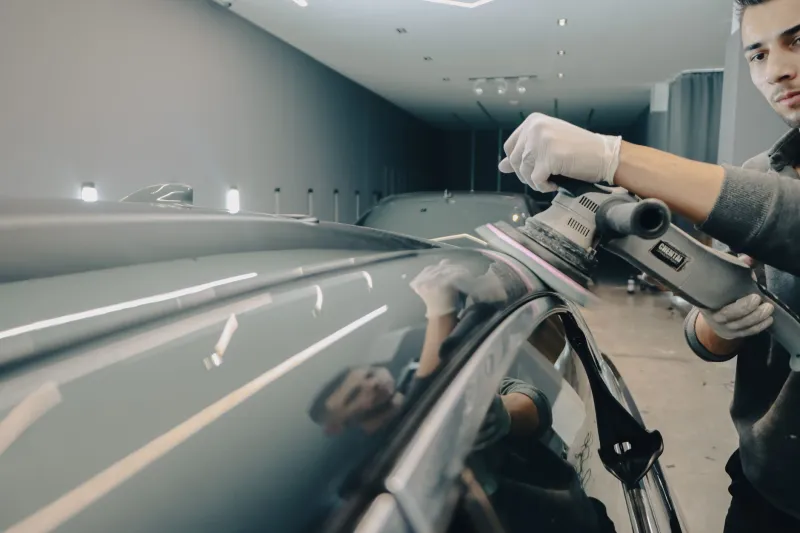
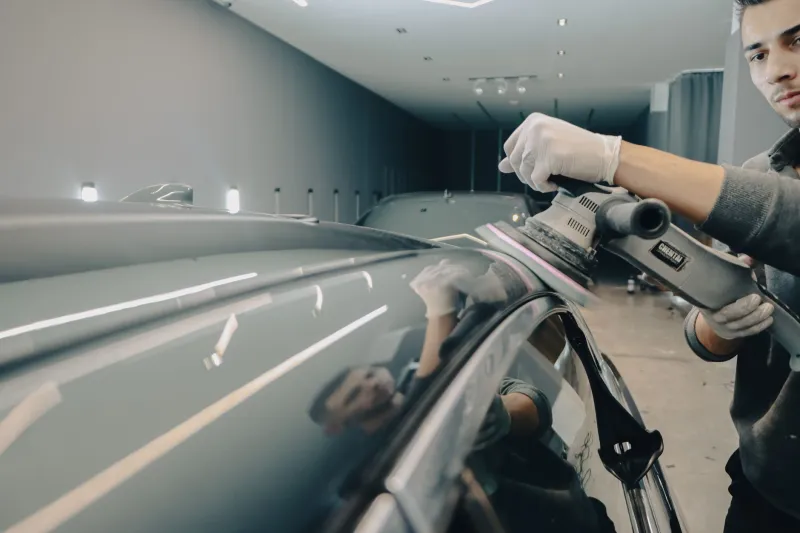
Once the surface is clean and dry, a trained detailer evaluates the paint under high-intensity lighting to map the severity and distribution of the damage. This assessment determines which combination of machine polisher speed, pad type, and polish compound is appropriate. Using too aggressive a compound on lightly swirled paint removes more clear coat than necessary. Using too mild a product on heavily damaged paint wastes time and produces incomplete results.
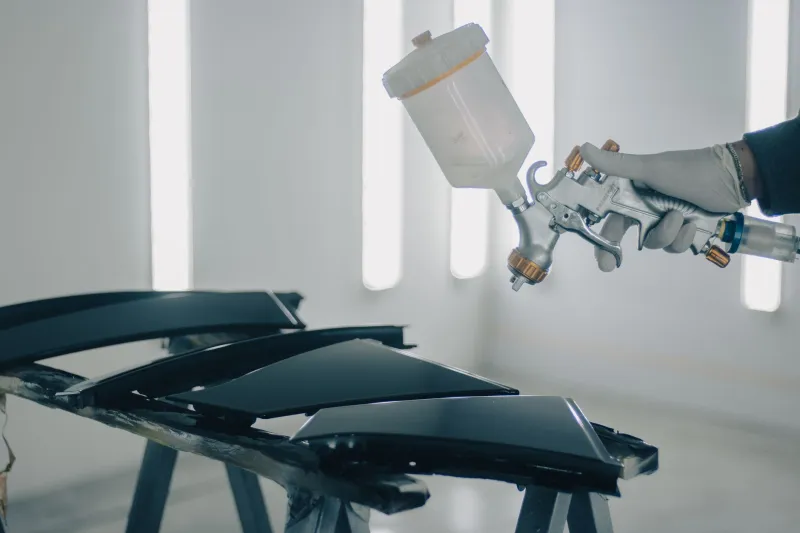
The correction itself is performed with a dual-action or rotary polisher, working in overlapping passes across each panel. The polish compound contains fine abrasive particles that gently abrade the surface of the clear coat, lowering the peaks created by the scratches until the surface is level again. As the scratches disappear, the reflective quality of the paint returns.
After correction, the vehicle is typically finished with a paint sealant, carnauba wax, or ceramic coating to protect the newly refined surface and extend the results. Without a protective layer, the corrected paint is vulnerable to the same damaging habits that created the problem in the first place.
What This Means for Your Vehicle
If your daily driver has lost the visual sharpness it had when you first brought it home, there is a reasonable chance that swirl marks — not irreversible damage — are responsible. The distinction matters because it changes both the diagnosis and the solution.
A vehicle with heavy swirl accumulation that undergoes professional paint correction can realistically be restored to a condition that rivals its original appearance. The process is not a cosmetic shortcut; it is a technically precise service that demands appropriate equipment, proper technique, and genuine expertise.
At Appleton Car Detailing, paint correction is one of the most transformative services we offer — not because the results are dramatic in a theatrical sense, but because the improvement is so consistently and visibly real. Seeing a vehicle's finish shift from clouded and tired to sharp and deep under the same lighting conditions is, in practical terms, one of the clearest demonstrations of what professional detailing actually accomplishes.
If you have been assuming that your car simply looks its age, it may be worth reconsidering. The dullness you are seeing likely has a name, a cause, and a solution — and it is probably not as permanent as it appears.