Beneath the Surface: How Appleton's Salt Season Creates a Corrosion Crisis That National Detailing Guides Completely Overlook

Most rust prevention content published online is written for a generalized audience. It assumes moderate winters, infrequent road salt application, and a relatively forgiving climate. For drivers in Appleton, Wisconsin, that assumption is not just imprecise — it is actively costly. The conditions that define a northeastern Wisconsin winter bear little resemblance to the scenarios those articles describe, and following their guidance can leave your vehicle's most vulnerable surfaces entirely unprotected.
Understanding why requires looking beyond the paint and into the places most owners never think to examine until damage has already taken hold.
What Makes Wisconsin's Road Salt Exposure Different
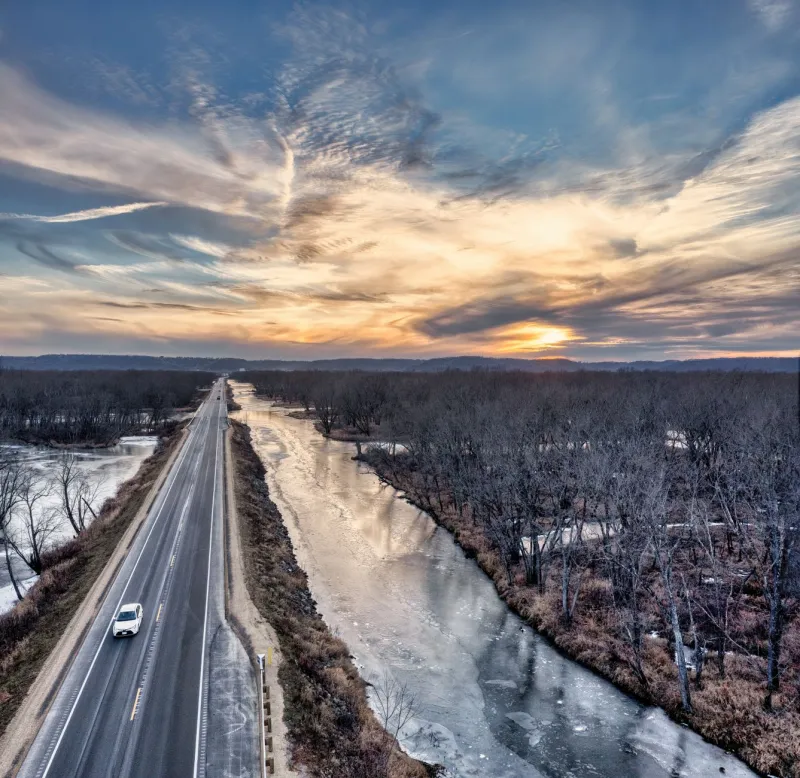
The Wisconsin Department of Transportation applies millions of pounds of road salt across state highways each winter. In the Fox Valley region, where Appleton sits at the intersection of several heavily trafficked corridors, salt accumulation on roadways is both heavy and prolonged. But the chemical exposure itself is only part of the problem.
What distinguishes Appleton's corrosion risk from conditions in warmer or drier climates is the freeze-thaw cycle. Temperatures routinely drop below freezing at night and climb above it during the day throughout November, December, February, and March. Each cycle draws salt-laden moisture deeper into panel seams, drain channels, and structural joints. It does not simply sit on the surface — it migrates.
Salt brine, which is now the preferred pre-treatment used by many municipal road crews because it bonds to pavement more effectively than granular salt, is particularly aggressive. It remains chemically active at lower temperatures than dry salt, which means vehicles traveling Appleton roads in early winter are exposed to a corrosive agent that is specifically engineered to resist evaporation and removal.
The Zones That National Advice Ignores
Surface-level rust prevention articles focus almost exclusively on painted exterior panels. Wax the hood. Seal the clear coat. Apply paint protection film. That guidance is not wrong, but it addresses perhaps twenty percent of the actual corrosion risk your vehicle carries after an Appleton winter.
Professional detailers who perform thorough post-winter inspections consistently identify the same high-risk zones that owner-directed maintenance routinely misses.
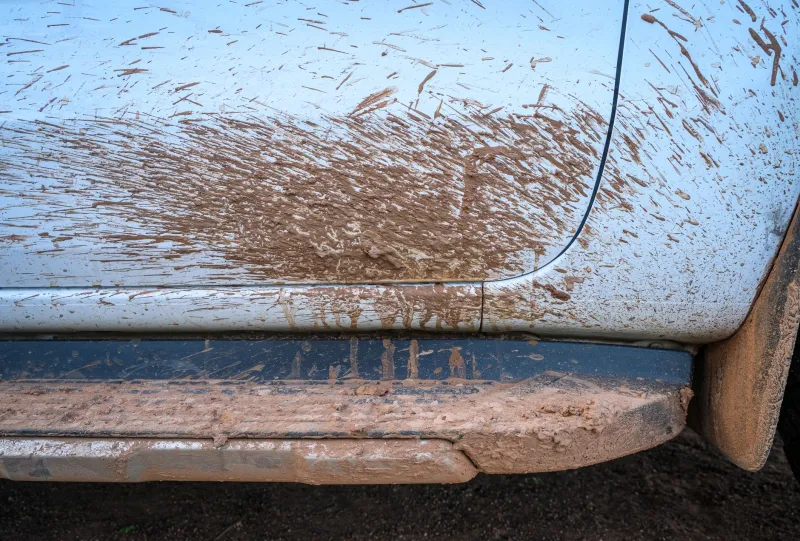
Wheel wells collect salt slurry at a rate far exceeding any other exterior surface. The plastic liners installed by manufacturers are designed to reduce splash, not to seal the metal structures behind them. Salt accumulates in the gap between the liner and the inner fender, where it sits in contact with bare or lightly coated metal for weeks at a time. Without deliberate flushing and treatment, this zone develops surface oxidation that is invisible until the liner is removed.
Undercarriage access points — the areas around suspension components, subframe mounting locations, and exhaust hangers — are particularly susceptible because they trap road debris alongside salt moisture. The combination of abrasion from gravel and chemical exposure from brine accelerates corrosion in ways that neither problem would produce independently.
Panel gaps and door jambs act as collection points for salt spray that travels upward from the road surface. The lower sections of door frames, trunk lids, and lift gates contain drainage channels that can become blocked by debris during winter driving. When those channels fail to drain properly, salt water pools against bare metal edges for extended periods.
Why Waiting for Visible Rust Is the Wrong Threshold
There is a widely held belief that rust is a problem you can monitor visually — that if you do not see orange discoloration, the metal is fine. This belief is incorrect, and it is responsible for a significant portion of the preventable corrosion damage that professional detailers encounter on vehicles brought in for spring service.
Oxidation begins at the microscopic level. By the time rust becomes visible to the naked eye, the underlying metal has already experienced meaningful structural degradation. In a vehicle's wheel wells or undercarriage, where paint adhesion is already compromised by constant mechanical stress, that progression from invisible oxidation to structural rust can occur within a single season under the right conditions.
From a financial perspective, the distinction matters considerably. Surface oxidation that is caught early can be treated, neutralized, and sealed at a relatively modest cost. Rust that has penetrated to the structural layer of a panel or frame component requires far more extensive remediation — if it can be addressed at all without panel replacement. The equity difference between those two outcomes, particularly on a vehicle being prepared for trade-in or private sale, frequently reaches into the thousands of dollars.
What a Professional Post-Winter Detailing Inspection Actually Examines
A thorough post-winter detailing service at a professional facility is not simply a thorough wash followed by wax application. For Appleton vehicles, it involves a systematic examination of the surfaces and zones described above, performed with the specific knowledge of what Wisconsin winters deposit and where those deposits cause the most harm.
Wheel liner removal — at least partial — is often necessary to properly flush and inspect the inner fender. Undercarriage inspection under adequate lighting allows a trained eye to identify early oxidation at mounting points and frame seams before it progresses. Panel gaps are flushed and examined for drainage integrity. Door jambs and trunk channels are cleaned and treated with products designed to displace moisture and inhibit further oxidation.
The paint surface itself receives attention last, not first. This sequencing matters because addressing the underlying and hidden surfaces before sealing the exterior ensures that moisture and salt residue are not trapped beneath a fresh protective layer where they can continue to cause damage invisibly.
Timing Your Detailing Strategy Around Appleton's Actual Season
National detailing calendars typically suggest a spring detail sometime in April or May. For Appleton, that timeline is imprecise in ways that carry real consequences. Road salt application in the Fox Valley can extend into March and occasionally April during heavy winters. A detailing appointment scheduled before salt season has genuinely concluded provides incomplete protection.
Conversely, delaying post-winter service until late spring means that salt residue has had additional weeks to work against unprotected surfaces. The optimal window for Appleton vehicles is typically the period immediately following the last meaningful salt event — which requires awareness of local road conditions rather than adherence to a generic seasonal calendar.
Pre-winter preparation is equally important and equally underutilized. Applying appropriate undercarriage protection and ensuring that panel drainage channels are clear before the first salt application of the season meaningfully reduces the accumulation that will occur over the following months.
The Cost of Following Advice That Was Not Written for You
Appleton drivers who rely on generalized detailing guidance are not making uninformed decisions — they are making decisions based on information that was simply not developed with their conditions in mind. The result is a maintenance strategy that protects the surfaces most people think about while leaving the surfaces that matter most entirely unaddressed.
The rust damage that develops in a Wisconsin wheel well or along a subframe seam does not announce itself. It accumulates quietly, season after season, until it becomes expensive enough to be undeniable. At that point, the cost of correction far exceeds what consistent, regionally informed professional detailing would have required.
For vehicles operated in Appleton, a detailing strategy built around the specific chemistry and mechanics of a Wisconsin winter is not a premium consideration. It is the baseline standard that the local environment demands.