What the Bottle Won't Tell You: Why Ceramic Coating Skill Outweighs Brand Every Time
Walk into almost any detailing shop in the country and you will be handed a brochure featuring the name of a ceramic coating product as though the name alone is the point. Phrases like "professional-grade formula" and "industry-leading nanotechnology" fill the page, and the implication is clear: the product is the protection. Pay for the right brand, and your vehicle is covered.
This framing is not entirely dishonest. Product quality does matter. But it is, at best, an incomplete picture — and for vehicle owners in the Appleton area, relying on it can lead to costly outcomes that no warranty language will fully remedy.
The truth that the detailing industry rarely advertises is this: the most advanced ceramic coating available will fail prematurely if the person applying it lacks the training, environment, and preparation discipline to install it correctly. Conversely, a skilled and meticulous installer working with a mid-tier product will routinely outperform an amateur handling a top-shelf formula.
The Foundation Problem Nobody Discusses at the Point of Sale
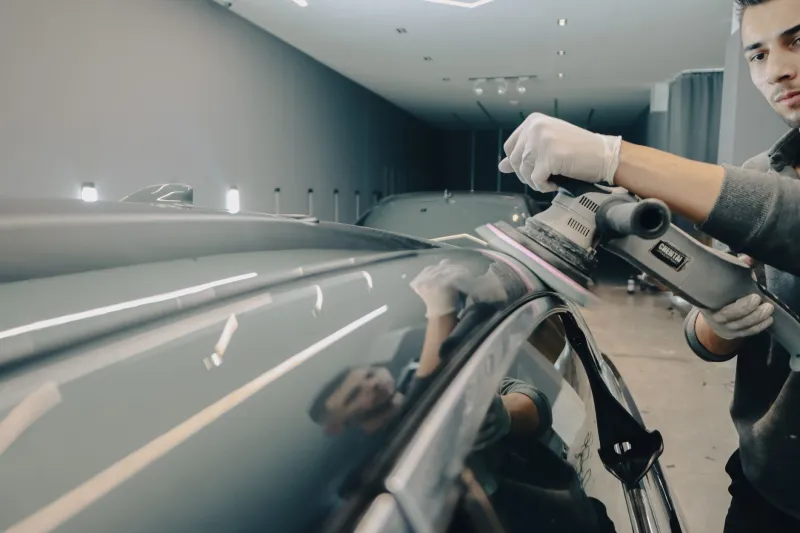
Before a single drop of ceramic coating touches a vehicle's surface, the paint must be in a condition that allows the coating to bond at the molecular level. This means the surface must be free of contamination, free of oxidation, free of embedded iron particles, and — critically — free of surface defects like swirl marks, fine scratches, and water spots.
Many coating failures that vehicle owners attribute to "bad product" are actually the result of coating over compromised paint. When a ceramic layer is applied over micro-scratches or residual contamination, it does not seal the surface cleanly. It locks in imperfections, creates uneven adhesion points, and develops weak zones that begin to degrade under UV exposure and thermal cycling far sooner than the advertised lifespan suggests.
Proper surface preparation is a multi-stage process. It typically includes a thorough decontamination wash, clay bar treatment to remove bonded surface contaminants, paint correction to address any marring or oxidation, and a panel wipe with an IPA solution to strip away any oils or residues before application begins. Done correctly, this preparation phase often takes longer than the coating application itself.
Shops that skip or abbreviate this process — whether to save time, reduce costs, or simply because they lack the expertise — are setting every coating job up for accelerated failure, regardless of what the product's technical data sheet promises.
How Wisconsin's Climate Exposes Every Weakness in an Improper Installation
Appleton's climate is not forgiving to vehicles, and it is particularly unforgiving to ceramic coatings that were not applied with precision. The region experiences wide thermal swings across the calendar year — from subzero temperatures in January to humid, high-UV summers in July and August. Road salt saturates the undercarriage and lower panels from late fall through early spring. Freeze-thaw cycles create physical stress on every surface layer, including protective coatings.
A ceramic coating with even minor adhesion deficiencies will respond to these conditions with visible degradation. Edges lift. Water beading diminishes unevenly. Salt and grime penetrate at weak points, accelerating the oxidation the coating was meant to prevent. What was sold as a two-to-five-year protective layer may show visible failure within a single Wisconsin winter.
This is not a hypothetical concern. It is a pattern that professional detailers in this region observe regularly when vehicles arrive having received ceramic coatings from less rigorous installers. The exterior may still carry a faint gloss, but the protective chemistry has already been compromised. The paint beneath it is no better protected than if no coating had been applied at all.
The Application Window Is Narrower Than Most Realize
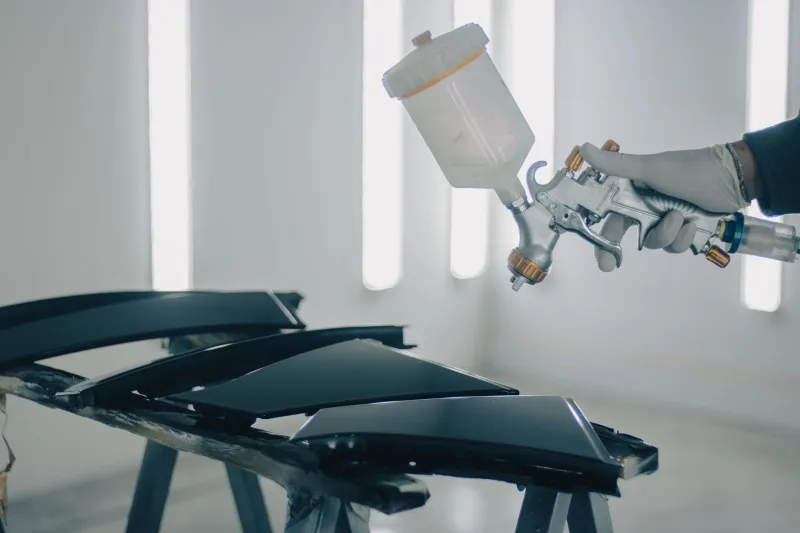
Ceramic coatings are sensitive to environmental conditions during application. Temperature, humidity, and airflow all affect how the coating levels, cures, and bonds to the paint surface. Most professional-grade products have defined application windows — specific temperature and humidity ranges outside of which the chemistry does not perform as engineered.
Amateur installers and underprepared shops frequently work outside these parameters, either because they lack climate-controlled installation environments or because they are unaware of how significantly ambient conditions affect outcomes. A coating applied in a cold, damp garage in November is not the same product as one applied in a properly conditioned detailing bay, even if it came from the same bottle.
Professional detailers who specialize in ceramic coatings invest in controlled environments precisely because they understand that the product's potential is only realized when the application conditions match the manufacturer's specifications. That investment is part of what separates a credentialed installer from a general detailing operation that has added coatings to its service menu without the infrastructure to support them.
Cure Time and Post-Application Care: Where Many Installations Unravel
The coating does not become fully protective the moment application is complete. Most professional ceramic products require a cure period of 24 to 72 hours before the surface should be exposed to water, and a longer period — sometimes several weeks — before the coating reaches its full hardness and chemical resistance.
During this window, the vehicle must be kept dry, out of direct sunlight, and away from contaminants that could interfere with the curing process. Installers who do not communicate these requirements clearly, or who return vehicles to owners without adequate post-care instruction, are setting up the coating for unnecessary stress before it has fully developed.
A professional installation includes a thorough explanation of the cure process, documentation of what the vehicle owner should and should not do in the days following pickup, and often a follow-up maintenance recommendation to ensure the coating is properly supported over its intended service life.
What to Ask Before You Commit to a Ceramic Coating Service
For Appleton vehicle owners considering a ceramic coating investment, the evaluation should begin long before any discussion of brand names or product tiers. The questions that matter most are process-oriented:
What does the surface preparation process include, and how many stages does it involve? Is the installation performed in a climate-controlled environment? What are the installer's credentials, and how many coating installations have they completed? What is the post-application care protocol, and how is it communicated to the vehicle owner?
If the answers to these questions are vague, abbreviated, or deflected in favor of product marketing language, that is meaningful information. A shop confident in its process will discuss it openly, because the process is the product.
The ceramic coating on your vehicle is only as durable as the preparation behind it and the expertise of the hands that applied it. In a climate as demanding as Appleton's, that distinction is not a minor technical footnote. It is the difference between protection that performs and a finish that fails.