Small Neglect, Catastrophic Bills: How Deferred Detailing Quietly Builds a Financial Crisis
The Quiet Arithmetic of Postponement
There is a particular kind of financial damage that does not announce itself. It accumulates slowly, invisibly, and without any single moment of obvious failure — until the bill arrives. For vehicle owners who defer professional detailing in favor of occasional DIY efforts or budget wash services, that bill has a way of being significantly larger than anticipated.
This is not a theoretical concern. It is a pattern that professional detailers in markets like Appleton observe with regularity: clients who arrive with vehicles in advanced states of deterioration, surprised to learn that what began as a small problem years ago has since required a very large solution. The compounding nature of deferred vehicle care is not widely discussed in automotive circles, but it deserves serious financial scrutiny.
Case Study: The Paint That Could Have Been Saved
Consider a scenario that repeats itself with predictable frequency. A vehicle owner in their third year of ownership decides that professional detailing is an unnecessary expense. The car looks reasonably clean to the untrained eye. A weekly automated wash keeps the surface free of visible dirt. What the owner cannot see — and what no automated wash addresses — is the progressive accumulation of industrial fallout, road tar, and iron contamination embedding into the clear coat.
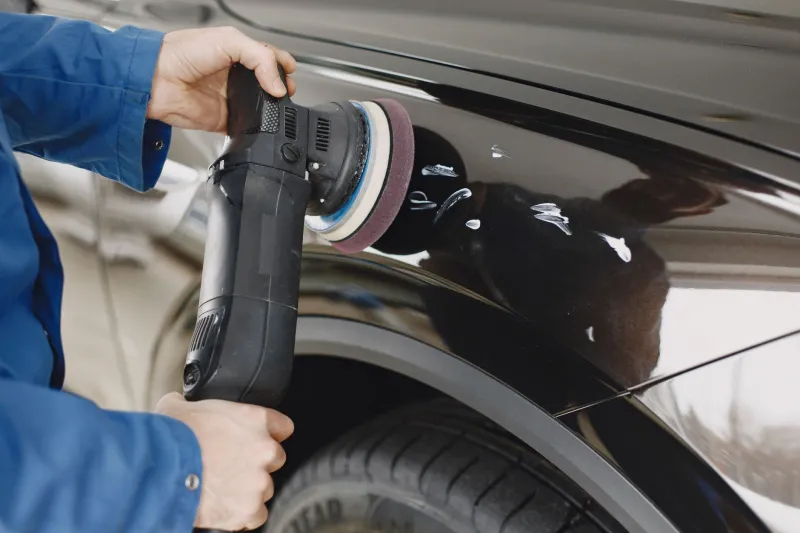
By year two of this approach, the clear coat has begun to oxidize in subtle patches near the hood and roof. By year three, swirl marks from improper washing technique have created a web of micro-abrasions that scatter light and dull the finish. By year four, a professional detailer's assessment reveals that paint correction is no longer sufficient in two panels — respray is the only viable option.
The cost of a single professional detailing appointment in year one: roughly $200 to $400, depending on vehicle size and service tier. The cost of two-panel resprays, paint correction on the remaining surfaces, and full decontamination four years later: upward of $2,800 to $4,500 at a reputable body shop. The arithmetic is not subtle.
Interior Neglect and the Odor Economy
Paint is not the only surface that compounds neglect into expense. Vehicle interiors present an equally instructive case. Organic matter — spilled beverages, food residue, moisture trapped in floor mats — does not simply dry and disappear. It migrates into foam padding, seeps beneath carpet backing, and creates the biological conditions necessary for mold and bacterial growth.
A detailing professional encountering a vehicle with six months of unaddressed moisture infiltration faces a very different job than one addressing the same vehicle at the one-month mark. At six months, the remediation may require extraction equipment, enzymatic treatments applied across multiple sessions, and in severe cases, partial carpet removal. What could have been resolved with a single interior detailing appointment at $150 to $250 becomes a multi-stage odor remediation process costing $500 to $900 — and that assumes the underlying materials have not been structurally compromised.
For vehicles with more severe organic contamination, replacement of seat foam or carpet assembly is not uncommon. Those costs, when combined with professional remediation labor, can approach or exceed $1,500 on mid-range vehicles.
The Ceramic Coating Gap: When Protection Expires Unnoticed
A third category of compounding cost involves protective coatings that vehicle owners believe are still active long after their effective lifespan has elapsed. Ceramic coatings, when properly applied and maintained, provide meaningful protection against UV degradation, chemical etching, and surface contamination. They are not, however, permanent — and they require periodic inspection and maintenance to remain effective.
Vehicle owners who invest in a ceramic coating application and then disengage from professional maintenance often discover, two to three years later, that the coating has degraded unevenly. Sections of the vehicle exposed to the harshest conditions — the hood, the roof, the forward-facing surfaces — show etching and contamination that the coating was no longer able to repel. Restoring the surface to a condition suitable for recoating requires paint correction that could have been avoided entirely with annual professional inspection and maintenance detailing.
The recoating process itself is not inexpensive. Depending on vehicle size and the extent of correction required, a full restoration and recoat can range from $1,200 to over $2,500. For owners who treated the original coating as a one-time solution, this represents an unexpected and largely avoidable expenditure.
Where the Tipping Point Actually Lives
The financial tipping point — the threshold at which deferred detailing transforms from a minor inconvenience into a significant expense — varies by vehicle, climate, and usage pattern. In a market like Appleton, Wisconsin, where road salt, freeze-thaw cycles, and UV exposure from open summer skies all act on vehicle surfaces simultaneously, that threshold arrives more quickly than it does in more temperate climates.
As a general framework, professional detailers observe the following progression: minor surface contamination that goes unaddressed for three to six months typically doubles the labor required to correct it. Contamination left for twelve months or more often crosses into territory where correction alone is insufficient, and restoration — a more invasive and more expensive process — becomes necessary. Interior issues follow a similar but faster curve, particularly in vehicles that experience any moisture infiltration.
The practical implication is that a $300 professional detailing appointment, performed on a reasonable schedule, consistently prevents the conditions that generate $1,500 to $5,000 restoration invoices. That is not a marginal return. It is a fundamental reframing of what professional detailing actually represents.
Reframing the Expense
The cultural tendency to classify professional detailing as a discretionary luxury — something appropriate for enthusiasts or special occasions, but not for practical vehicle ownership — is precisely the mental model that makes compounding neglect so common. When detailing is framed as an indulgence, it is the first line item removed during a budget review. When it is understood as preventative infrastructure, it occupies the same rational category as oil changes, tire rotations, and brake inspections.
Vehicles are, for most American households, the second largest asset they own. Treating the surface systems of that asset as optional maintenance is a financial position that rarely survives contact with the actual costs of restoration. The evidence from professional detailing practices across markets like Appleton is consistent: the owners who spend modestly and regularly spend far less in total than those who defer and eventually spend enormously.
The detailing debt is real. It accrues silently, and it collects with interest. The most effective strategy for avoiding it is also the simplest: do not allow it to begin.
Appleton Car Detailing provides professional vehicle care services for drivers throughout the Appleton area. Our team offers comprehensive detailing, paint correction, ceramic coating, and interior restoration — the preventative investment that protects your vehicle's condition and your long-term financial interest.