Not All Interiors Are Created Equal: A Professional's Guide to Caring for Leather, Alcantara, and Fabric
Why Interior Material Type Changes Everything
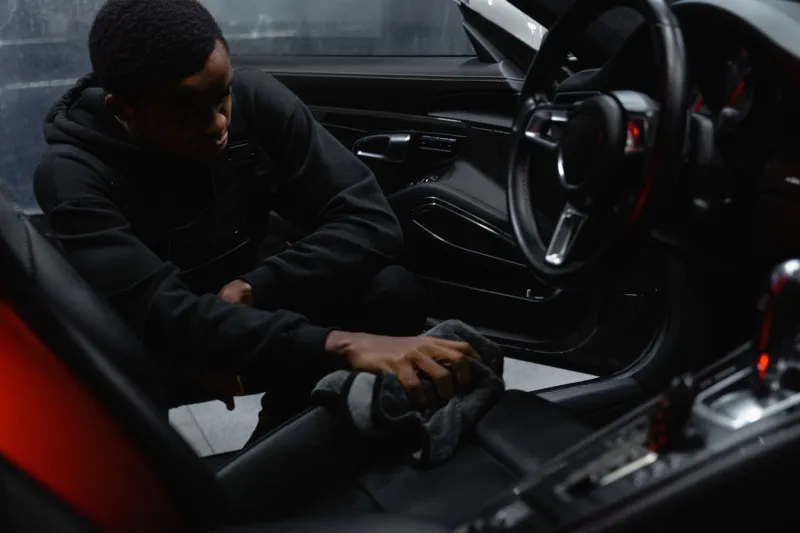
The interior of a modern vehicle is a carefully engineered environment, and the materials used across different makes and models vary dramatically in their composition, porosity, and sensitivity to cleaning agents. A luxury sedan may feature full-grain leather seating, brushed aluminum trim, and soft-touch synthetic panels. A performance coupe might incorporate Alcantara suede on the headliner and door inserts. A family crossover likely relies on woven fabric upholstery designed for durability rather than refinement.
Each of these surfaces responds differently to moisture, heat, UV exposure, and the chemicals found in everyday cleaning products. Treating them all with the same spray-and-wipe approach is one of the most common mistakes car owners make — and one of the most consequential. At Appleton Car Detailing, the interior assessment is always the first step, because the cleaning strategy must be built around the specific materials present rather than a generic protocol.
Leather: The Material That Rewards Patience
Genuine leather interiors are prized for their appearance and tactile quality, but they are also among the most misunderstood materials in automotive care. Leather is skin. It breathes, it absorbs, and it ages — and how it ages depends almost entirely on how it is maintained.
The most common mistake: Using household cleaners, baby wipes, or general-purpose automotive sprays on leather surfaces. Many of these products contain alcohol, silicone, or harsh surfactants that strip the leather's natural oils, accelerating drying and cracking over time. The damage is gradual and not always immediately visible, which is precisely why it tends to go unaddressed until the cracking or discoloration becomes severe.
Professional leather care follows a disciplined sequence. The surface is first vacuumed to remove loose debris from seams and perforations. A pH-balanced leather cleaner is then applied with a soft brush, working into the grain to lift embedded oils, perspiration, and transfer from clothing dyes. This step is more involved than it appears — leather in a frequently used driver's seat accumulates months of contaminants that a surface wipe will not address.
Following the cleaning stage, a quality leather conditioner is worked into the surface. Conditioning replenishes the oils that keep leather supple and creates a barrier against future soiling. In Wisconsin's climate, where vehicle interiors swing between dry heated air in winter and humid conditions in summer, conditioning is particularly important for preventing premature cracking along high-stress areas like seat bolsters and headrests.
Perforated leather requires additional care, as moisture introduced during cleaning can penetrate the perforations and reach the foam substrate beneath. Professional detailers use carefully controlled product application to clean without saturating the surface.
Alcantara: Luxury Suede That Punishes Carelessness
Alcantara is a synthetic microfiber material developed in Italy and used extensively in high-end European vehicles, as well as in performance-oriented trims across many brands sold in the US market. It has the appearance and feel of suede, with a distinctive soft nap that gives interiors a premium, tactile quality. It is also one of the most unforgiving materials to clean incorrectly.
The most common mistake: Scrubbing Alcantara with a brush or cloth in a back-and-forth motion. This compresses and damages the nap, leaving permanent shiny or matted patches that alter the surface's appearance and cannot be reversed without professional intervention.
Alcantara is cleaned using a specialized process that involves a dedicated Alcantara-safe cleaner applied with a soft-bristle brush worked in a single direction, followed by careful extraction with a microfiber cloth. The goal is to lift contaminants from the fibers without disturbing their orientation. The nap is then restored using a specific brushing technique that realigns the fibers and recovers the material's characteristic texture.
Stains present an additional challenge. Alcantara is highly absorbent, and liquid spills — coffee, soda, and body oils being the most frequent culprits — must be addressed immediately to prevent permanent setting. Even then, improper stain treatment using the wrong solvent can spread the stain or cause discoloration. Professional detailers carry targeted products formulated specifically for Alcantara and understand which solvents are safe for the material's dye structure.
Alcantara also benefits from periodic protection treatments that reduce its absorbency and make future cleaning easier. This is not a step most DIY enthusiasts are aware of, yet it makes a meaningful difference in how the material holds up over the life of the vehicle.
Fabric and Woven Upholstery: Durable but Not Indestructible
Fabric interiors are the most common configuration across the US vehicle market, found in everything from economy sedans to three-row SUVs. Their reputation for durability is generally well-earned, but fabric presents its own set of cleaning challenges — primarily related to deep soiling, odor retention, and the risk of overwetting during cleaning.
The most common mistake: Saturating fabric upholstery with water or cleaning solution and then allowing it to air dry without extraction. Overwetting drives contaminants deeper into the fabric and the foam padding beneath, creating conditions favorable to mold and mildew growth. In enclosed vehicles, this can produce persistent odors that are extremely difficult to eliminate without full seat removal and professional treatment.
Professional fabric cleaning uses hot water extraction equipment — similar in principle to professional carpet cleaning — combined with pre-treatment sprays that break down embedded soils before extraction. The process removes contaminants from deep within the fiber structure rather than simply lifting surface-level dirt. The result is a noticeably cleaner, brighter appearance and the elimination of odors that surface treatments cannot address.
For families with children or pet owners, fabric protection treatments applied after cleaning add a meaningful layer of resistance to future staining. These products coat individual fibers and cause liquids to bead rather than immediately absorbing, providing a window of time to blot up spills before they set.
The Before-and-After Reality
Interior detailing transformations are among the most dramatic results in professional automotive care, precisely because vehicle interiors accumulate years of use in a confined space. A leather seat that appears irreparably stained and cracked often responds remarkably well to proper cleaning and conditioning. Alcantara that has been matted by improper cleaning can frequently be restored to near-original texture with the correct technique. Fabric upholstery that carries the embedded history of road trips, commutes, and school runs emerges from professional extraction looking substantially renewed.
The distinction between what a professional interior detail achieves and what a consumer-grade product applied at home can accomplish is not marginal — it is the difference between surface maintenance and genuine restoration.
Protecting Your Investment Year-Round
Regardless of interior material type, consistent care is always more effective and less expensive than periodic rescue treatments. Scheduling a professional interior detail once or twice per year, combined with attentive daily habits — removing trash promptly, addressing spills immediately, and avoiding eating in the vehicle — extends the life of every material and preserves the value of the vehicle as a whole.
Appleton's climate adds particular urgency to this schedule. Winter months bring salt, sand, and moisture tracked in on boots and clothing, while summer heat accelerates the drying and fading of unprotected leather and fabric alike. A professional interior detail timed to the transition between these seasons addresses the accumulated damage from each and prepares the interior for what comes next.