What That Lingering Smell Is Really Costing You: The Financial and Structural Truth About Interior Odors
Most drivers address an unpleasant car odor the same way: they crack the windows, hang a pine-scented tree from the rearview mirror, and hope for the best. It is an understandable response. What it is not, however, is a solution. Beneath that temporary masking lies a set of problems that quietly accumulate—degrading materials, accelerating biological growth, and ultimately reducing the market value of a vehicle in ways that are difficult and expensive to reverse.
At Appleton Car Detailing, we inspect vehicle interiors on a daily basis. What we encounter regularly are odor conditions that owners have either grown accustomed to or genuinely underestimated. The goal of this article is to examine what those odors actually represent, why they matter financially, and what genuine professional remediation looks like compared to the surface-level approaches most drivers attempt on their own.
The Biology Behind the Smell
Odors do not simply exist in the air of a vehicle's cabin. They originate from biological or chemical matter that has been absorbed into porous surfaces—carpet fibers, foam padding beneath upholstery, headliner fabric, seat cushioning, and even the HVAC system's evaporator core. Once a substance penetrates these materials, it begins a process of decomposition or microbial activity that generates odor-causing compounds continuously.
Pet urine is among the most chemically aggressive sources. When urine dries, it leaves behind uric acid crystals that are largely odorless in their dry state. The moment humidity returns—whether from a rainy Wisconsin day, a spilled drink, or simply breath and body heat inside a closed vehicle—those crystals reactivate and release the sharp, ammonia-forward smell familiar to any pet owner. This reactivation cycle means that cleaning the surface without neutralizing the crystallized residue underneath produces only temporary improvement.
Mildew presents a different but equally persistent challenge. In a region like northeastern Wisconsin, where temperature swings are dramatic and vehicles are frequently exposed to rain, road moisture, and snow melt, interior dampness is an ongoing risk. Carpet padding in particular acts as a reservoir for moisture that the surface layer above it may have already dried from. Once mold or mildew colonies establish themselves in that padding, they release mycotoxins and volatile organic compounds that no amount of ventilation or fragrance will eliminate.
Food and beverage spills complete the most common odor trifecta. Sugary liquids ferment. Dairy products decompose rapidly. Organic matter of any kind, once lodged in the seams of upholstery or beneath floor mats, begins to break down in ways that become increasingly difficult to address the longer they are left untreated.
What Buyers and Appraisers Actually Notice
The financial consequences of interior odors are more concrete than many vehicle owners realize. When a prospective buyer opens the door of a used vehicle, the olfactory impression they receive in the first few seconds is among the most powerful factors shaping their perception of the car's overall condition. Unlike a scratch or a dent, an odor implies something invisible and potentially systemic—biological contamination, moisture damage, or poor ownership habits that may extend to mechanical maintenance as well.
Dealership appraisers and private buyers alike are experienced at identifying odor-affected vehicles, and they adjust their offers accordingly. A car that might otherwise warrant a strong trade-in value can be reduced by hundreds or even thousands of dollars when odor is present. In competitive private-sale markets, odor is frequently the reason a listing sits without offers or attracts only lowball inquiries.
Beyond the transactional moment, untreated odor sources actively degrade interior components over time. Uric acid, for instance, breaks down adhesive bonds in carpet backing. Persistent moisture accelerates rust on the metal floor pan beneath the carpet. Mold growth in HVAC ducting can compromise air quality for every occupant and eventually require component replacement that runs well into the hundreds of dollars at a dealership service center.
Why Air Fresheners and Consumer Products Fall Short
The consumer market for car odor products is substantial, and the marketing language surrounding those products is frequently misleading. Terms like "eliminates odors" and "neutralizes at the source" appear on products that, in practice, do little more than introduce a competing fragrance into the cabin air.
For odors that have penetrated porous materials, surface sprays and wick-style fresheners are categorically insufficient. They do not reach the uric acid crystals beneath carpet padding. They do not address mold colonies in foam cushioning. They do not treat the evaporator core where microbial growth can persist through multiple seasons.
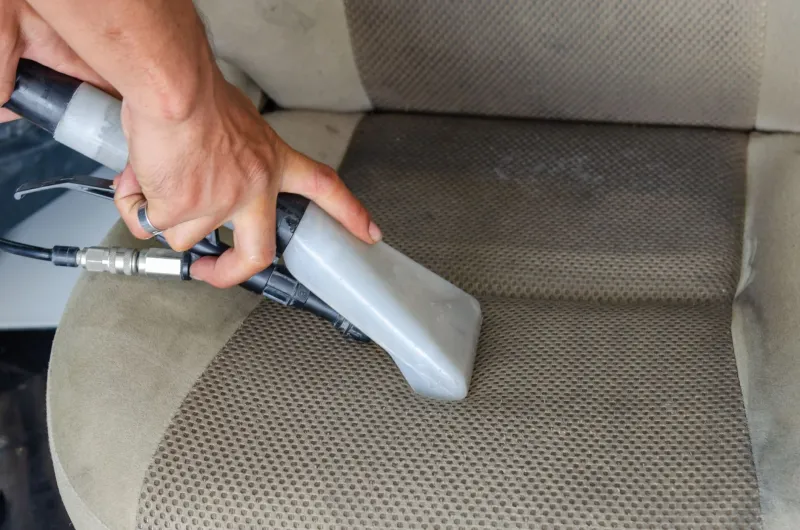
Enzyme-based treatments represent a meaningful step forward for pet odor specifically. These formulations use biological catalysts to break down the organic compounds responsible for odor rather than simply masking them. However, effective enzyme treatment requires proper dwell time, adequate saturation to reach the affected depth, and extraction of the broken-down residue afterward—a process that requires professional equipment to execute correctly.
What Professional Odor Remediation Actually Involves
A professional approach to interior odor remediation begins with source identification, not treatment. Before any product is applied, a thorough inspection determines where contamination is concentrated, how deeply it has penetrated, and what materials are involved. This diagnostic step is what separates professional detailing from DIY attempts, and it is the reason that professional results hold over time.
For biological contamination such as pet accidents or food decomposition, the process typically involves partial disassembly—removing floor mats, pulling back carpet edges where necessary, and accessing the padding beneath. Enzyme-based treatments are then applied at the correct concentration and allowed sufficient dwell time to complete their chemical action before thorough extraction removes the residue.
For mildew and moisture-related odors, ozone treatment is one of the most effective available tools. Ozone generators introduced into a sealed vehicle cabin produce a high concentration of O₃ molecules that oxidize odor-causing compounds at a molecular level. This process reaches areas that no spray or wipe can access, including HVAC ducting, seat foam, and headliner backing. Ozone treatment requires the vehicle to be unoccupied during the process and properly ventilated afterward, which is why it is performed in a controlled professional environment rather than attempted casually at home.
HVAC-specific odors—the musty smell that emerges when the air conditioning is first activated—require targeted treatment of the evaporator core and ducting. Antimicrobial fogging introduced through the cabin air intake can address microbial growth within the system, though severe cases may require more involved service.
The Cost of Waiting
Odor remediation, like most aspects of vehicle care, follows a straightforward principle: the longer a problem is deferred, the more expensive it becomes to resolve. A fresh pet accident addressed within hours is a manageable cleaning task. The same accident left untreated for weeks, with uric acid crystals now fully embedded in carpet padding, may require carpet removal and replacement rather than treatment.
For Wisconsin drivers who plan to sell, trade, or simply maintain the value of their vehicle, interior odor is not a cosmetic inconvenience. It is a condition with measurable financial consequences and a tendency to worsen without intervention. Addressing it professionally—with techniques that reach the actual source rather than masking the symptom—is an investment that consistently returns its cost in preserved resale value and avoided repair expense.
If you have noticed a persistent smell in your vehicle that has not responded to conventional cleaning, it is worth having it professionally assessed. What seems like a minor annoyance today has a way of becoming a significant problem by the time a buyer is standing at your car door.