Before You Sign: What a Professional Detailer Discovers on a Used Car That a Dealer Report Simply Cannot
A vehicle history report tells you what was recorded. A professional detailer tells you what actually happened. For buyers considering a used vehicle purchase in the Appleton area, understanding the difference between these two sources of information could mean the difference between a sound investment and a costly mistake.
The used car market rewards those who ask better questions. And increasingly, the most revealing questions are being answered not by a Carfax printout or a dealership walk-around, but by an experienced detailing professional who knows precisely where a vehicle hides its history.
The Limits of a Vehicle History Report
Carfax, AutoCheck, and similar reporting services are useful tools. They aggregate data from insurance claims, state DMV records, auction houses, and service centers — and they do so reasonably well. But their fundamental limitation is one that buyers rarely consider: they only document incidents that were formally reported.
A fender bender repaired privately between two individuals? Absent from the report. A flood-damaged vehicle dried out and sold at auction before a claim was ever filed? Potentially invisible. A previous owner who resprayed a door panel after a parking lot scrape and never disclosed it? Completely undetected.
This is not a flaw in the reporting system so much as it is a structural reality. These services document what enters the official record. Professional detailers, by contrast, read what the vehicle itself has recorded — in its paint, its seams, its trim gaps, its glass, and its upholstery.
What Trained Eyes See That Instruments Miss
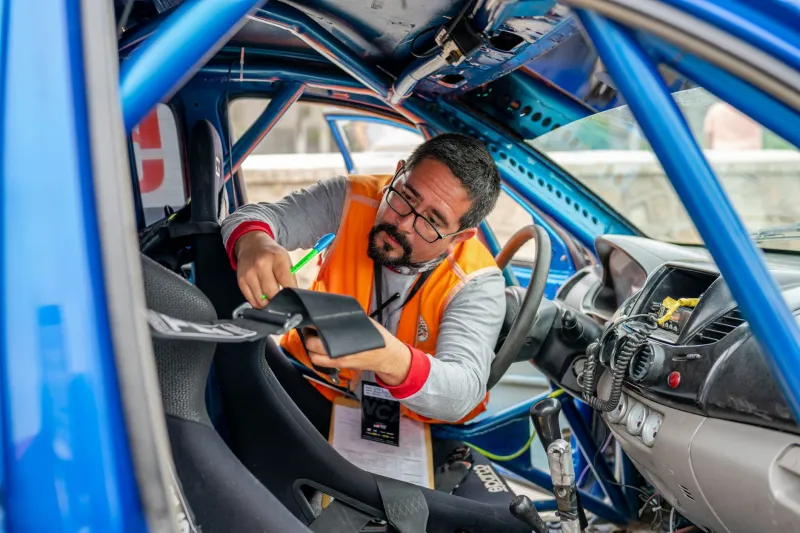
When a professional detailer conducts a pre-purchase inspection, they are not performing a mechanical evaluation. They are not checking brake lines or compression ratios. What they are doing is something equally important and far less commonly understood: they are reconstructing the vehicle's physical history through surface analysis.
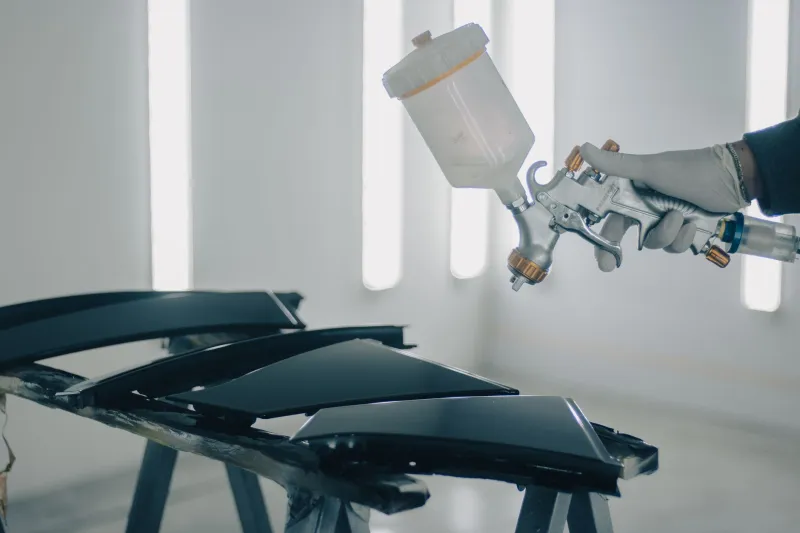
Consider paint. A factory paint job has a consistent thickness across every panel, a uniform texture, and color that transitions seamlessly from one section to the next. A repainted panel — whether from a collision repair, a rust correction, or a cosmetic respray — almost always deviates from these standards in ways that are invisible to an untrained eye but immediately apparent to a detailer who has spent years working with automotive finishes.
Paint depth gauges can detect thickness inconsistencies down to the micron. But the gauge is only as useful as the person interpreting the readings. A detailer experienced in paint correction and surface restoration understands what normal factory variation looks like versus what indicates a repaint. They understand which panel combinations suggest a side-impact repair. They know how to differentiate between a blend job done by a skilled body shop and one done hastily before a sale.
Beyond paint, the inspection extends to panel alignment. Gaps between body panels are engineered to precise tolerances at the factory. When a vehicle has been involved in a significant collision — even one that was subsequently repaired — those tolerances are rarely restored to factory specification. Subtle unevenness in the gap between a hood and a fender, or a door that doesn't quite sit flush with the rocker panel, tells a story that no report captures.
Interior Surfaces as Evidence
The exterior is where most buyers focus their attention, but the interior of a vehicle can be equally revealing — sometimes more so.
Odor is among the most honest indicators a vehicle offers. Musty, mildew-adjacent smells that persist beneath the fragrance of an air freshener suggest moisture intrusion — whether from a compromised seal, a sunroof drain failure, or flood exposure. A detailer who has remediated water-damaged interiors knows the specific pattern of damage that moisture leaves behind: staining along the lower edges of seat fabric, rust blooming along floor pan seams, and discoloration on carpet backing that no surface cleaning can fully conceal.
Headliner condition, the integrity of weatherstripping, the state of door jamb seals — each of these elements contributes to a fuller picture of how the vehicle was maintained and what environmental conditions it has been exposed to. A vehicle that spent years parked outdoors in a harsh Wisconsin winter without proper protection will show it, even if the exterior has been freshly detailed for the sale.
Real-World Implications for Buyers
The practical value of a pre-purchase detailing inspection is not merely informational — it is financial.
Consider a buyer evaluating a $40,000 used SUV. The vehicle's history report shows no accidents. The dealership's inspection clears it mechanically. But a professional detailing inspection reveals a repainted rear quarter panel, a replacement tailgate that doesn't quite align with the factory specification, and carpet backing along the driver's side that shows evidence of prior moisture exposure.
None of these findings necessarily disqualify the vehicle. What they do is change the conversation. The buyer now has documented evidence to negotiate a meaningful price reduction. They can request a more targeted mechanical inspection focused on the rear suspension and frame components that a rear-impact collision might affect. They can factor future remediation costs — potential odor treatment, paint correction, seal replacement — into their offer.
Without that inspection, the buyer signs papers on a vehicle with an unknown history, at a price that assumes a clean one.
Why Detailers See What Dealers Don't
It is worth noting that this is not a criticism of dealership service departments. Mechanical inspections serve a distinct purpose, and a qualified technician evaluating brake wear or transmission function is performing a genuinely valuable service. The issue is one of scope, not competence.
Dealership inspections are designed to assess whether a vehicle operates safely and reliably. They are not designed to reconstruct the vehicle's cosmetic and structural history through surface analysis. That is a different discipline, requiring a different set of trained observations.
A professional detailer who has corrected thousands of paint finishes, remediated dozens of water-damaged interiors, and spent years developing the tactile and visual literacy to distinguish factory condition from post-market alteration brings a perspective that simply does not exist in a standard pre-sale inspection process.
A Practical Step Before Any Significant Purchase
For buyers in the Appleton area considering a used vehicle purchase — whether from a dealership, a private seller, or an online platform — a pre-purchase detailing inspection represents one of the more cost-effective due diligence steps available. The cost of the inspection is modest relative to the transaction it informs. The potential savings, in negotiating leverage alone, frequently exceed that cost many times over.
More importantly, it provides something that no report can: an honest, surface-level account of what the vehicle has actually been through.
In a market where sellers have every incentive to present their vehicles favorably, having an independent professional whose expertise lies in reading what vehicles reveal — rather than what sellers disclose — is not a luxury. For anyone making a significant automotive investment, it is simply sound practice.