What a Professional Detailer Can Read in Your Paint, Seats, and Wheels Before You Say a Word
Before a single product is applied, before a single question is asked, a trained detailing professional has already begun forming a comprehensive picture of your vehicle's history. The condition of your car is not simply a measure of cleanliness—it is a record. Every surface, every panel, every seam holds information about how a vehicle has been driven, where it has been parked, and how consistently it has been maintained. At Appleton Car Detailing, this diagnostic phase is not a formality. It is the foundation of every job we perform.
What follows is an honest account of what professionals observe during a close inspection—and what those observations say about the person behind the wheel.
The Wheels Tell You Everything About Driving Style
Wheels are among the most revealing surfaces on any vehicle. Brake dust accumulation—specifically its distribution and density—offers a surprisingly accurate window into how aggressively a driver uses their brakes. Heavy, baked-on deposits concentrated near the caliper area suggest frequent hard stops: a pattern common in urban commuters who spend significant time in stop-and-go traffic, as well as in drivers who habitually brake late.
By contrast, evenly distributed, lighter deposits often indicate highway-dominant driving with gradual deceleration. Neither pattern is inherently problematic, but the buildup itself is. Iron-rich brake particulate is corrosive. Left unaddressed, it etches into wheel finishes—whether painted, polished, or clear-coated—and begins degrading the surface at a microscopic level. Drivers who assume a routine rinse is sufficient are often surprised to learn that what appears to be surface grime has already bonded chemically with their wheel's finish.
The condition of the tire sidewalls adds another layer of information. Cracking or blooming along the sidewall suggests prolonged exposure to ozone and UV without protective treatment—common in vehicles parked outdoors year-round, particularly through Wisconsin's fluctuating seasonal conditions. Scuffing along the outer edge of the sidewall, on the other hand, frequently points to curb contact, a habit more common than most drivers would care to admit.
Paint Condition as a Maintenance Timeline
The paint surface of a vehicle functions as a chronological record of every car wash, parking lot, and weather event it has encountered. Professional detailers do not simply look at paint—they read it.
Swirl marks, for instance, are almost universally the product of improper washing technique: circular hand-wash motions with abrasive materials, automatic tunnel washes with worn brushes, or dry wiping with low-quality towels. Their presence indicates that the vehicle has been cleaned regularly but incorrectly—a distinction that matters enormously. A vehicle with swirl-marked paint has often been maintained with good intentions but poor methodology.
Water spots clustered near panel edges or roof seams suggest a pattern of air-drying rather than hand-drying after washing. In areas with hard water—which describes much of northeastern Wisconsin—those spots contain mineral deposits that, over time, etch into the clear coat. The longer they remain, the deeper the damage.
Oxidation, the chalky or milky appearance that affects older or neglected paint, tells a different story: one of extended periods without any protective treatment. UV exposure breaks down the polymers in automotive clear coat, and without periodic application of wax, sealant, or ceramic coating, that degradation accelerates. A vehicle showing early-stage oxidation on its hood and roof—the surfaces with the greatest sun exposure—is typically one that has gone multiple years without meaningful paint protection.
Random isolated scratches, particularly at door handle height or along the lower door panels, are the signature of parking lot environments and casual contact. They are nearly universal, but their depth and frequency reveal how carefully a driver selects parking locations and how mindful they are of their surroundings.
The Interior as a Behavioral Profile
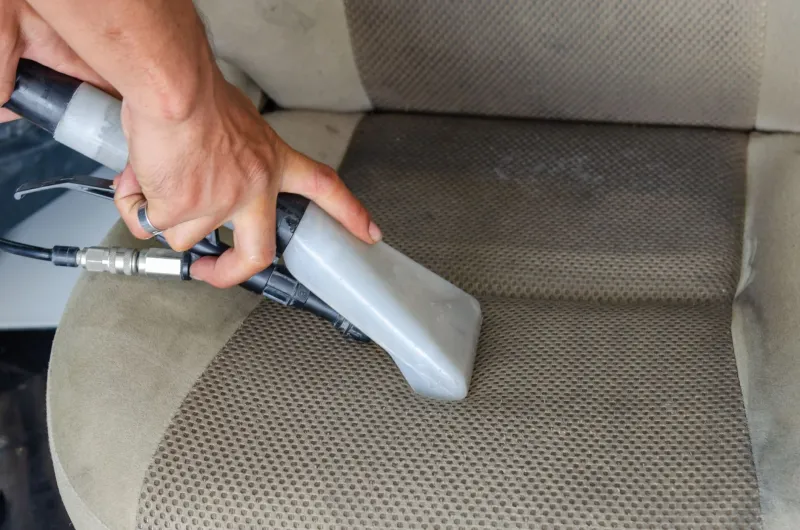
If the exterior reflects maintenance habits, the interior reflects lifestyle. Fabric seat compression patterns indicate how frequently a vehicle is used and where primary occupants sit. Heavy bolster wear on the driver's seat combined with pristine rear seating suggests a solo commuter. Equal wear distribution across all seating positions points to a family vehicle or rideshare use—contexts that dramatically accelerate interior degradation.
Pet hair embedded in carpet fibers and seat fabric is among the most labor-intensive contamination types a detailer encounters. Beyond the visual impact, pet dander works its way into the padding beneath upholstery, creating odor reservoirs that surface cleaning alone cannot address. Drivers who transport animals regularly without protective seat covers are often unaware of the depth of that contamination until a professional brings it to their attention.
The condition of the dashboard and door panels reveals sun exposure habits and product history. A dashboard with significant cracking or fading has been subjected to prolonged direct sunlight without UV protectant—common in vehicles without tinted windows or those parked outdoors daily. Conversely, a dashboard coated in greasy residue often indicates the use of silicone-based dressing products, which attract dust and degrade certain plastics over time.
Food and beverage staining in cup holders and between seat cushions is not simply an aesthetic concern. Sugar-based residues are acidic and, when left untreated, accelerate the degradation of fabric and leather dye. The longer they remain, the more likely they are to become permanent.
What the Inspection Is Really About
A professional detailing audit is not an exercise in judgment. The goal is not to critique a driver's habits but to understand a vehicle's current condition with enough precision to address it correctly. Every surface that shows wear or neglect represents an opportunity to restore, protect, and extend the life of the vehicle.
What this kind of close inspection does, however, is demonstrate something important: vehicle condition is not random. It is the cumulative result of decisions made every day—where you park, how you wash, what products you use, and how consistently you invest in professional care. Drivers who understand this tend to make better decisions. And vehicles that receive consistent, informed maintenance hold their value, their appearance, and their structural integrity far longer than those that do not.
At Appleton Car Detailing, every vehicle that enters our bay receives this kind of thorough, professional assessment. Not because we are looking for problems, but because understanding the full picture is the only way to deliver results that are genuinely worth the investment.