What You Think You Paid For Versus What Your Car Actually Has: The Condition Gap That Costs Owners Thousands
The Memory Problem Nobody Talks About
There is a curious phenomenon that nearly every professional detailer in Appleton—and across the country—encounters on a routine basis. A vehicle owner drops off a car with genuine confidence that it is in reasonably good shape. They remember the last time they had it detailed. They remember paying for a full interior clean, a paint correction, perhaps even a ceramic coating application. In their mind, that investment is still holding.
Then the inspection begins.
What the detailer finds and what the owner remembers are frequently two entirely different realities. This is not a matter of negligence or dishonesty. It is a deeply human cognitive pattern—one that has measurable financial consequences when the time comes to trade in, sell, or simply protect a vehicle's long-term value.
Understanding why this gap forms, and how professionals close it, is worth every car owner's attention.
Why Familiarity Erodes Perception
Psychologists have long documented a phenomenon sometimes called "change blindness"—the tendency of the human mind to stop registering gradual shifts in familiar environments. Your car is perhaps the most familiar object in your daily life outside your own home. You sit in it, drive it, and park it so frequently that your brain has essentially automated the experience.
This automation is efficient for daily functioning. It is disastrous for vehicle maintenance awareness.
When oxidation begins creeping across the hood, it does not announce itself. It advances by fractions of a millimeter over weeks and months. When the leather on the driver's seat starts to dry and crack along stress lines, the change is imperceptible from one day to the next. When brake dust embeds into wheel finish or water spots begin etching into clear coat, no single morning reveals the damage in a way that triggers alarm.
By the time the deterioration is obvious to an owner, it has typically been progressing for six to eighteen months. What could have been addressed with a targeted correction service has now become a more involved—and more expensive—restoration.
What Professional Detailers Actually Find
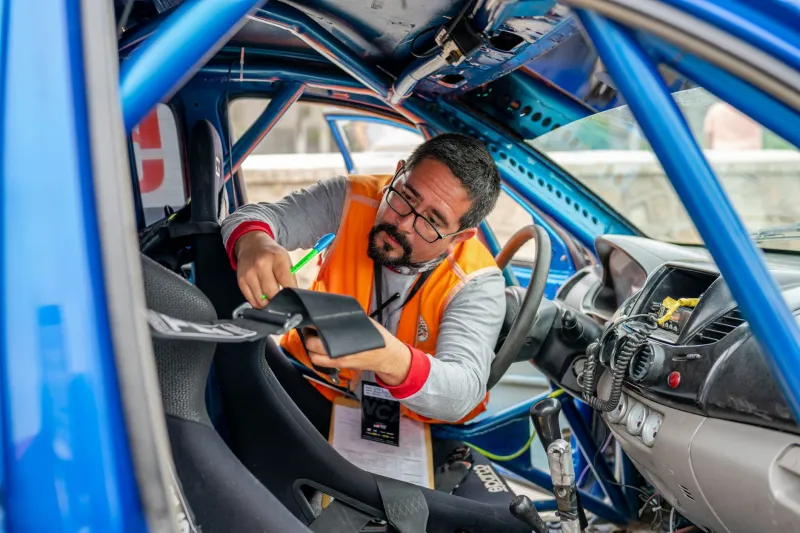
At Appleton Car Detailing, the initial inspection of any vehicle follows a structured protocol that most owners find genuinely surprising. Not because the findings are exotic, but because they reveal damage hiding in plain sight.
Paint surface integrity is evaluated under controlled lighting at multiple angles. Swirl marks, micro-scratches, water spot etching, and early-stage oxidation are assessed in zones—hood, roof, trunk lid, door panels, and lower rocker panels each tell a different story about how a vehicle has been maintained and where it has been exposed to the most environmental stress.
Clear coat thickness and uniformity can indicate prior accident repairs that were never disclosed, or areas where aggressive polishing has thinned the protective layer to a point where further correction becomes risky without professional measurement.
Interior surface degradation is evaluated not just visually but by texture and odor. Leather that appears acceptable in a dim garage often shows cracking, color fading, and surface breakdown under proper inspection lighting. Fabric seats and carpeting can harbor biological matter that contributes to persistent odor long after the visible source has been cleaned.
Trim and seal condition around windows, doors, and the engine bay frequently reveals cracking, shrinkage, and gaps that allow moisture intrusion—a category of damage that owners almost never associate with detailing but that directly affects both resale value and long-term structural integrity.
Wheel and brake component surfaces accumulate iron contamination and brake dust that bond chemically to finish over time. What looks like surface grime to an owner is often embedded particulate that requires decontamination rather than simple washing.
The Investment You Made Versus the Condition You Have
Here is the uncomfortable arithmetic that the condition gap creates. A vehicle owner who paid for professional detailing eighteen months ago made a real investment. But if that vehicle has been through two Wisconsin winters, accumulated fifteen thousand miles, and received only occasional automated car washes in the interim, the condition of that car today may be significantly worse than the day they drove it home from that appointment.
The investment was real. The protection it purchased was time-limited. And the assumption that the car is still in that condition is costing the owner money in a very specific way: it delays the intervention that would preserve resale value.
Dealers and private buyers assess vehicles quickly and unsympathetically. They do not factor in what you paid for services a year ago. They evaluate what they see, feel, and smell in the moment. A car that an owner believes is worth a premium because of prior detailing expenditures will be graded on its current condition—period.
Closing the Gap Before It Becomes a Loss
The practical solution is straightforward, even if it requires a shift in how owners think about vehicle care. Rather than treating detailing as a one-time event tied to a specific occasion—a sale, a gift, a seasonal clean—it should be understood as a periodic audit function.
A professional inspection every six to twelve months does not necessarily mean a full correction service every time. What it does mean is that a trained eye evaluates the vehicle's actual condition against its prior baseline, identifies any deterioration that has begun, and recommends targeted intervention before minor issues compound into major ones.
This approach is both more effective and, over time, more economical than allowing conditions to degrade to the point where restoration becomes the only option.
What an Honest Audit Changes
Owners who have gone through a structured professional inspection often describe the experience as clarifying. Not discouraging—clarifying. They leave with an accurate understanding of where their vehicle stands, what specific issues require attention, and what a realistic maintenance schedule looks like going forward.
That clarity has financial value. It informs trade-in timing decisions. It reveals whether a vehicle is approaching the threshold where detailing investment generates diminishing returns versus where targeted correction will meaningfully improve resale outcome. It also, frankly, restores the owner's relationship with their vehicle—replacing vague assumption with accurate knowledge.
At Appleton Car Detailing, this is precisely the conversation we are built to have. Premium detailing is not simply about making a car look clean for a weekend. It is about maintaining an accurate, honest picture of a vehicle's condition over time—and acting on that picture before the market does it for you.
The gap between what you remember paying for and what your car actually has is rarely dramatic in its early stages. But left unexamined, it has a way of becoming exactly the kind of number that shows up on a dealer's appraisal sheet at the worst possible moment.